

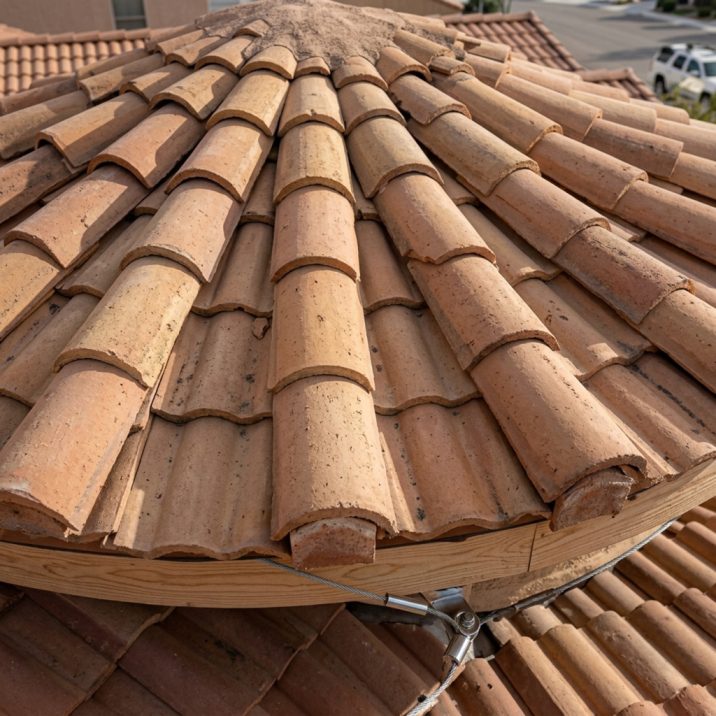
Spanish Tile Roof Repair and Replacement in New Mexico: Costs, Contractors & What to Expect
Clay tile roofs are one of the most recognizable features of New Mexico residential architecture. From Albuquerque’s historic Nob Hill neighborhoods to Santa Fe’s hillside estates, Spanish tile defines the regional look, and for good reason. The material suits the climate, complements the regional style, and outlasts most alternatives by decades when properly maintained. That durability does not make tile roofs maintenance-free. Tiles crack from hail, freeze-thaw cycling, or foot traffic during HVAC service calls. Underlayment deteriorates silently beneath intact-looking tiles over time. Flashing around chimneys and penetrations works loose. When any of these problems appear, New Mexico homeowners need accurate numbers before they pick up the phone. This guide covers real Spanish tile roof repair cost in New Mexico for 2026, helps you decide when repair makes sense versus full replacement, and explains what the project process looks like from first call through final inspection. Why Spanish Tile Roofs Are Common in New Mexico Clay tile fits New Mexico homes on every level, architectural, climatic, and practical. The barrel and S-curve profiles associated with Spanish Colonial and Pueblo Revival construction have defined regional building for more than a century, and that tradition continues in new builds throughout the Albuquerque metro, Rio Rancho, and the East Mountains. Beyond aesthetics, clay performs exceptionally well in the high-desert environment. New Mexico’s intense solar radiation, low ambient humidity, and dramatic day-to-night temperature swings can degrade lesser materials faster than their rated lifespans. Clay tile handles UV exposure without breaking down chemically. It does not warp, rot, absorb moisture, or corrode. In a climate where asphalt shingles often reach the lower end of their expected service life due to UV intensity, tile offers a meaningful longevity advantage. Clay also provides natural thermal mass. The tile absorbs heat during the day and releases it slowly at night, which moderates attic temperatures during New Mexico summers. The airspace beneath a properly installed barrel tile system enhances that benefit further. Typical clay tile lifespans in New Mexico range from 40 to 60 years with routine maintenance. Some well-maintained installations exceed that range significantly. The limiting factor is almost never the tile itself. The underlayment beneath and the metal flashing at penetration points tend to fail first, usually after 20 to 30 years, often while the tile above looks perfectly fine from the street. Spanish Tile Roof Repair Costs in New Mexico Repair costs depend heavily on what has failed and how much of the roof is affected. These ranges reflect realistic 2026 pricing across the New Mexico market. Broken Tile Replacement: $200 to $900 Replacing individual cracked or broken tiles is the most straightforward repair. Labor to remove the damaged piece, source a matching replacement, and set it correctly typically runs $200 to $450 for a single tile. Replacing three to six tiles in one zone is more efficient and often totals $400 to $900. The practical challenge is matching aged tile. Discontinued profiles or color shifts over decades can make finding an exact match difficult and occasionally require sourcing alternatives that blend well rather than match perfectly. Underlayment Repair: $600 to $1,800 When the felt or synthetic underlayment beneath the tiles has failed in a localized section, targeted repair is possible without a full replacement. The process involves carefully lifting tiles in the affected zone, replacing the underlying membrane, and reinstalling the tiles. Costs run $600 to $1,800 depending on area size and how many tiles break during careful removal. Underlayment on homes built before the mid-1990s typically used organic felt, which the National Roofing Contractors Association recognizes as having a significantly shorter effective service life than modern synthetic membranes. If your roof is from that era, a section repair may address one zone while broader deterioration exists elsewhere beneath intact-looking tile. Flashing Repair: $350 to $900 Flashing seals the junctions where the roof meets vertical surfaces, including chimneys, skylights, vent stacks, and parapet walls. These junctions are among the most common water entry points on any roof. Reflashing a chimney or vent penetration on a clay tile roof typically costs $350 to $900. Full chimney reflashing on larger or more complex installations can run higher. Contractors must work carefully around adjacent tiles to avoid cracking them during the replacement process. Leak Repair: $400 to $1,200 Active leaks on Spanish tile roofs often have multiple potential sources. The tile may be intact while water enters through a failed boot seal, cracked flashing, or deteriorated underlayment at a low point. Leak diagnosis and repair typically costs $400 to $1,200, not including any associated interior remediation. Finding the actual entry point on a tile roof requires specific experience with clay systems. Contractors unfamiliar with tile installations sometimes misidentify the source, which leads to repeat callbacks and additional expense. Valley and Storm Damage Repairs: $500 to $4,500 Roof valleys channel significant water volume during New Mexico’s monsoon season, which runs July through September. Failed valley metal allows water to work beneath adjacent tiles. Valley repair or replacement typically costs $500 to $1,500 depending on valley length and configuration. After hail events, multiple tiles may crack across large sections of a roof. Storm damage repairs covering a significant surface area can run $1,500 to $4,500 or more, which shifts the repair-versus-replace calculation considerably. When Repair Makes Sense vs. Full Replacement This decision is one of the most consequential a New Mexico homeowner faces with a tile roof. Several factors shift the calculation clearly in one direction. Roof Age: Tile roofs under 25 years old with localized damage are almost always better candidates for targeted repair. Beyond 30 years, the underlying components, especially the underlayment and original metal flashing, warrant a broader evaluation before committing to repair costs. Extent of Tile Damage: When fewer than 15 to 20 percent of tiles are damaged, repair is typically efficient and cost-effective. Damage affecting 30 percent or more of the roof surface shifts the economics toward replacement, particularly when scattered repair labor across the field approaches replacement cost anyway. Underlayment Condition: This is