
General Contractors License Gb98 #416168

General Contractors License Gb98 #416168
Insured And Bonded
Plumbing problems rarely stay "small." The longer water moves in the wrong direction, the more it damages. We offer fast, reliable plumbing services in Albuquerque to fix the issue cleanly and keep the home running smoothly again.
A slow drip under the sink, a ceiling stain that keeps coming back, water pressure that drops to nothing every morning, these are plumbing repair situations that rarely fix themselves. As a plumber near me that Albuquerque homeowners actually recommend, we find the source of the problem first, explain what needs to happen in plain language, and complete the repair carefully so you’re not back to the same spot six months from now. We also handle leak detection in Albuquerque for those situations where water is clearly getting somewhere it shouldn’t, but the source isn’t obvious.

We don't guess at the source. We trace the issue properly, then carry out the pipe repair or connection fix where the failure is actually happening, not just where the stain showed up.
When components are worn beyond a patch-up, we replace what needs replacing. Water heater repair in Albuquerque, failing fixtures, and aging connections all get handled with parts and work built to last.
Plumbing repairs often sit near walls, floors, and cabinetry that took time and money to finish. We work carefully around those areas so the repair doesn't leave a secondary mess to deal with.
Plumbing isn’t only about fixing the pipe itself, but it is also about what water damages when it keeps moving somewhere it shouldn’t. A slow leak behind a wall can go unnoticed for months before it shows up as warped flooring or a mold patch. As a reliable plumbing service in Albuquerque, we focus on stopping the issue at the source, checking the surrounding areas for secondary damage, and completing any necessary home renovation services to restore walls, flooring, and finishes so the space looks cared for, not disrupted.

A lot of plumbing headaches come from quick fixes that only reduce the symptom for a while. We take the time to find what’s actually causing the problem, then repair it in a way that supports long-term stability, well not just a temporary solution that sends you searching for a plumber again in eight months.
Slow or blocked drains are one of the most common plumbing complaints we see. We clear the obstruction properly and check whether the blockage is a one-time buildup or a sign of a deeper issue in the line.
Cold water surprises and uneven pressure across the home both point to something specific. We identify the source whether it's the water heater, a pressure regulator, or a partially closed valve and correct it so flow feels normal again throughout the house.
A running toilet, a weak flush, or one that won't stop cycling wastes water and gets worse over time. Toilet repair in Albuquerque is one of the faster fixes we handle, and getting it done properly the first time matters.
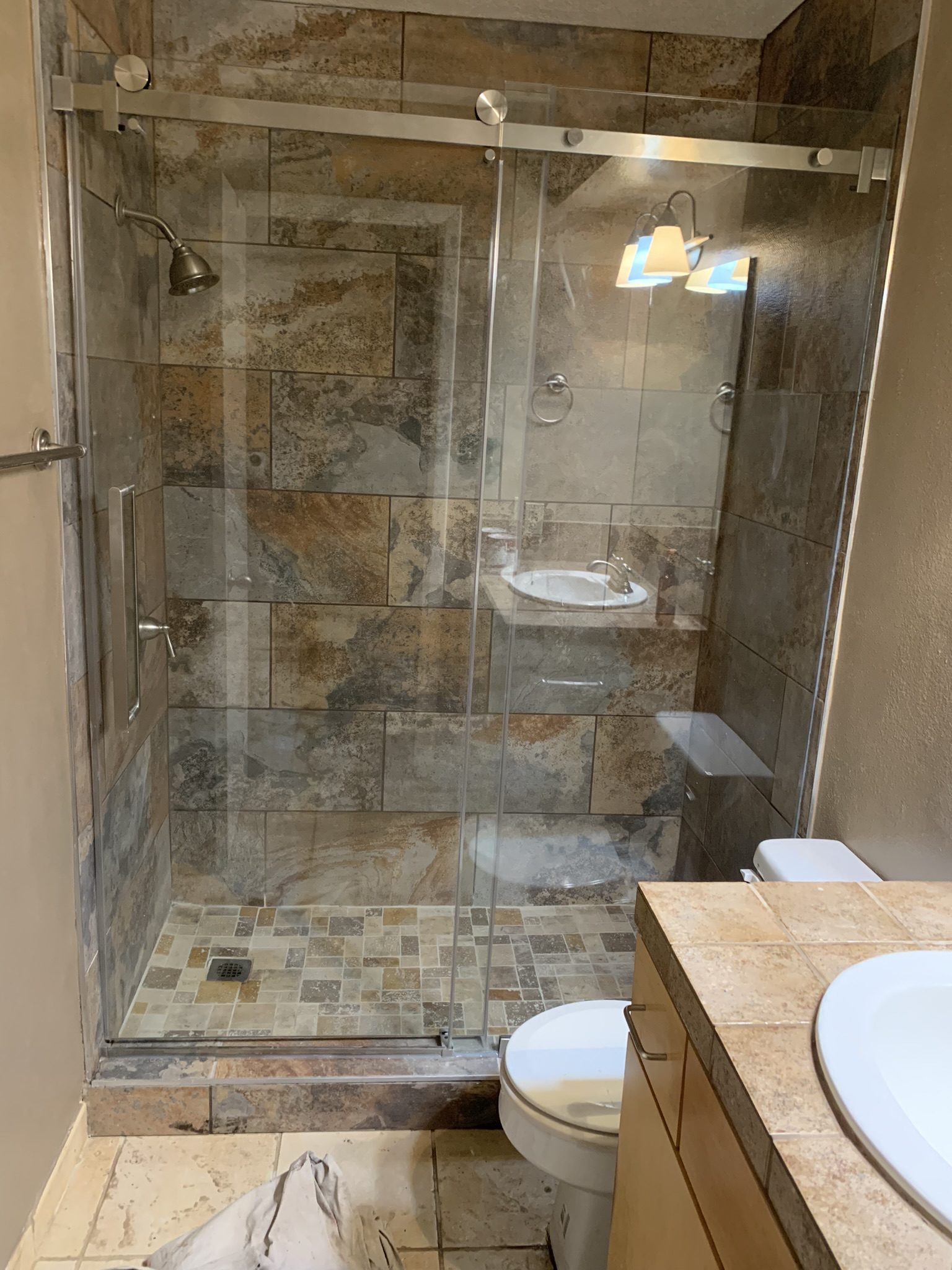
Remodeling a bathroom or kitchen? Our bathroom remodeling services include installing new plumbing connections as part of the broader project, ensuring everything is run correctly from the start without improvised workarounds that can cause problems down the line.
Message us with the room, the symptom, drip, stain on the ceiling, low pressure, a running toilet, or a complete fixture failure, and how long it’s been happening. A photo helps if you have one. We’ll reply with the best next step and get it on the schedule. You can also view all home services to see the full range of repair, remodeling, and construction solutions we offer.
Also dealing with an electrical issue in the same space? Our electrical services in Albuquerque handle both trades under one crew so you’re not coordinating separately.
Low water pressure in Albuquerque can originate from several different points in the system. Common causes include mineral scale buildup inside older galvanized pipes—a known issue in New Mexico due to the region's hard water—a failing pressure-reducing valve at the main line, a partially closed shutoff valve, a corroded or undersized water meter, or a distribution line leak that is bleeding pressure before it reaches the fixtures. Diagnosing the actual cause requires measuring pressure at different points in the system rather than assuming the most common culprit. We trace the drop to its source before recommending a repair so you only fix what is actually failing.
The location, pattern, and behavior of a ceiling stain offer useful clues. A stain directly beneath a bathroom, kitchen, or laundry area on the floor above strongly suggests a plumbing source. A stain near the exterior walls or below the roof deck—particularly one that worsens during rain or heavy snow melt—typically points to the roof or flashing. A stain that grows slowly and consistently regardless of weather usually indicates a slow supply line or drain connection issue rather than roof penetration. We look at both possibilities during an assessment, since misidentifying the source leads to fixing the wrong system.
Galvanized steel pipes were standard in homes built before the 1970s and are still found in many Albuquerque neighborhoods. Over time, galvanized pipe corrodes from the inside out, narrowing the interior diameter, reducing water pressure, and eventually developing pinhole leaks. Spot repairs on galvanized systems are generally a short-term solution—they address one failure point while the same corrosion continues in adjacent sections. If pressure has dropped noticeably across multiple fixtures or you are experiencing recurring leaks in the same line, a repipe to copper or PEX is typically the more cost-effective long-term choice.
Exposed supply lines in uninsulated exterior walls, garages, crawlspaces, and beneath mobile homes are the most vulnerable to freezing in New Mexico's colder nights. Wrapping those pipes with fiberglass pipe insulation or foam sleeve insulation provides meaningful protection. Allowing a slow drip from a cold-water faucet during hard freezes keeps water moving through vulnerable sections. Knowing the location of your main shutoff valve before a freeze event—rather than during one—is critical, since a burst pipe requires shutting off water quickly to limit damage. If your home has a history of frozen pipes, we can assess whether repiping those specific runs through interior wall space is a better permanent solution.
New plumbing for an addition or remodel requires roughing in both supply lines (hot and cold) and drain lines to code-required locations before walls are closed. Drain lines must be sloped correctly—typically 1/4 inch per foot of horizontal run—and properly vented to prevent siphoning and sewer gas from entering the home. If the new fixtures are far from the existing drain stack, additional venting may be needed. In Albuquerque, all new plumbing in permitted projects is subject to inspection before walls are closed. We plan the rough-in to minimize how much of the existing structure needs to be opened and restore finished surfaces cleanly after inspection.