

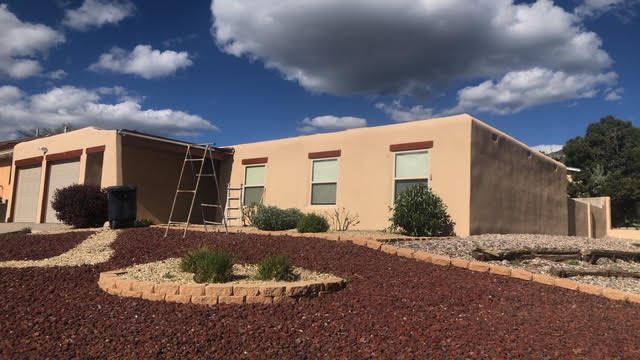
Stucco Repair Cost in New Mexico: What Homeowners Actually Pay in 2026
Stucco is the defining exterior finish across New Mexico. It shows up on Pueblo Revival homes in Santa Fe. It covers Territorial-style houses in Albuquerque. And it shapes adobe-inspired builds in Taos, and it wraps newer subdivisions in Rio Rancho and Las Cruces. The high desert climate is part of why stucco works so well here. But that same climate is also what wears it down. Intense sun, wide temperature swings, and, depending on where you live, either monsoon downpours or hard winter freezes all take a toll over time. Knowing what stucco repair actually costs in New Mexico helps you budget accurately. It also helps you recognize a fair quote when you see one, and spot an inflated one just as fast. This guide breaks down real 2026 pricing by repair type, by region, and by what pushes the number up or down. Pricing on its own only tells part of the story, though. A 1970s adobe-style stucco system in Taos fails differently than a 2005 EIFS system in Rio Rancho. Lath and plaster is the trade stucco actually evolved from, and a contractor who understands it catches those differences early. That saves you from an expensive surprise mid-project. Average Stucco Repair Cost in New Mexico Most stucco repair projects in New Mexico fall between $350 and $6,000. That’s a wide range. A hairline crack on one wall and a wall section with deep water damage are two completely different jobs, and the price reflects that difference. A small patch repair typically runs $350 to $800. A repair involving moisture damage or widespread cracking can climb to $2,000 or $6,000. Full resurfacing of an entire home’s exterior sits in its own category, running $5.00 to $7.50 per square foot, or roughly $7,500 to $18,000 for an average-sized home. A full tear-down to the substrate costs more; see our stucco resurfacing vs. full replacement guide for that breakdown. Here is a general breakdown of what new mexico homeowners typically pay for stucco repair in 2026: Repair Type Typical Cost Range Hairline crack repair $150 to $450 Structural crack repair $400 to $1,800 Small patch repair (under 10 sq ft) $350 to $800 Medium patch repair (10 to 50 sq ft) $800 to $2,800 Water damage repair $1,000 to $6,000+ Full resurfacing (per home) $7,500 to $18,000 These figures line up with current national data. Angi, Thumbtack, and HomeGuide all put stucco repair nationally between $8 and $50 per square foot, with typical projects landing between $600 and $2,900. New Mexico’s numbers sit toward the lower-to-middle end of that national band for straightforward repairs. Labor rates here run below coastal and high-cost metro markets, which helps keep routine work affordable. Once water damage or substrate replacement enters the picture, though, New Mexico pricing climbs toward the upper end of the national range just like anywhere else. Stucco Repair Cost Per Square Foot Across New Mexico Per-square-foot pricing is the easiest way to compare quotes from different contractors. It strips project size out of the equation and gives you a clean number to compare. Across New Mexico, stucco repair generally costs $8 to $25 per square foot. Surface-level work sits at the low end of that range. Think hairline cracks or small chips that only need patching. Repairs that require cutting out damaged substrate, replacing wire lath, and matching a custom texture land toward the high end instead. Full resurfacing runs $12 to $18 per square foot in most of the state. Homes with severe substrate damage, or ones that need multiple fresh coats, can push past $20 per square foot. Labor typically accounts for at least half the total cost. Licensed stucco contractors in New Mexico currently charge $45 to $75 per hour, and that rate is one of the biggest swing factors in any final quote. How Stucco Repair Cost Varies by Region and Climate New Mexico’s climate isn’t uniform, and neither is the damage stucco takes on across the state. A contractor who only works in one region can easily misread what’s actually failing when they see it somewhere else. Albuquerque. The dominant issue here is thermal cracking. Daytime heat expands the stucco surface, and overnight cooling contracts it right back down. Years of that cycle create hairline and structural cracks over time. The monsoon season, which runs roughly July through September, turns any open crack into a fast-moving moisture problem. Albuquerque also sits at around 5,300 feet, so UV exposure is stronger than at lower elevations. That degrades finish coats faster than in milder climates. See our Albuquerque stucco repair services for city-specific details. Santa Fe and Taos. At higher elevation, freeze-thaw cycling replaces monsoon damage as the primary driver. Water works its way into a crack, freezes, and expands, forcing the crack wider than it started. This process often reaches the substrate faster than thermal cracking alone would. Repairs in these areas tend to sit toward the upper half of the statewide range, since freeze-thaw damage more often calls for substrate and lath work rather than a simple surface patch. Learn more about stucco repair in Santa Fe and stucco repair in Taos. Las Cruces. Sustained, intense UV exposure in the southern part of the state accelerates delamination. That’s the process where the finish coat starts separating from the base coat underneath. It shows up as chalking, fading, and eventually peeling, rather than cracking outright. Repairs here usually involve more finish-coat work than crack repair, which shifts the cost mix even when the total lands in a similar range to other regions. Details on stucco repair in Las Cruces cover the local delamination pattern in more depth. Rio Rancho. A large share of the housing stock in Rio Rancho was built in the 1990s and 2000s using EIFS synthetic stucco systems. Those systems are now 20 to 30 years old in many neighborhoods, which puts them close to the end of a typical EIFS service life. Homeowners here are more likely to need foam-board replacement and