

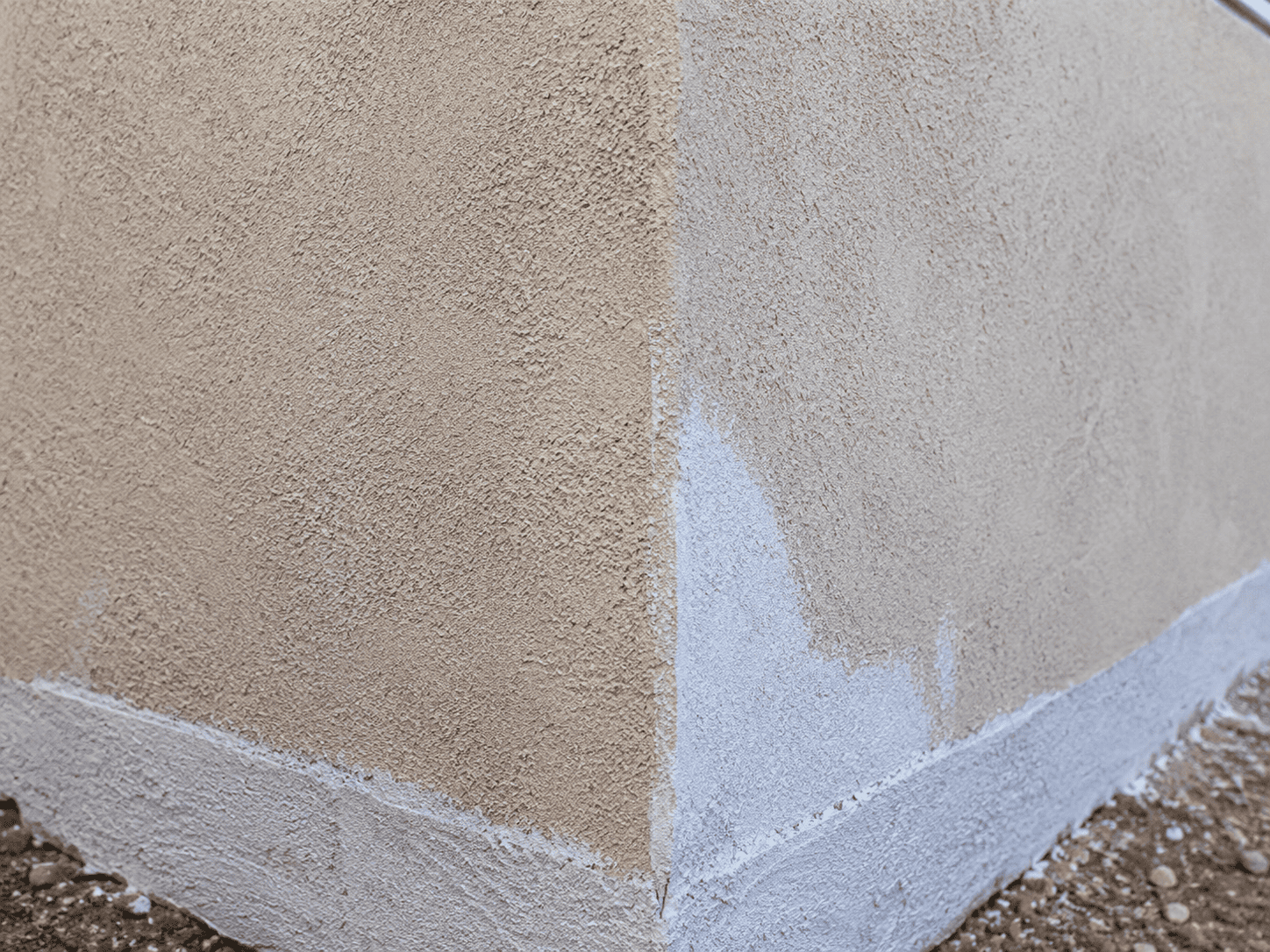
How Long Does Stucco Last in New Mexico?
Lifespan, Warning Signs & Replacement Timeline Quick answer: A properly installed traditional three-coat stucco system in New Mexico typically lasts 50 to 80 years structurally, though the visible finish coat needs attention every 15 to 25 years. EIFS (synthetic stucco) systems have a shorter practical lifespan, often 20 to 30 years, because moisture problems tend to surface earlier. The number that matters most for your specific wall isn’t the material’s theoretical maximum. It’s how the original installation handled moisture, and how the last owner maintained it. Most articles answer this question with a single number, as if every stucco wall in Albuquerque, Santa Fe, and Las Cruces ages on the same clock. It doesn’t. A wall installed correctly over a proper weather-resistive barrier, with a weep screed sitting where code requires it, behaves nothing like a wall where a previous contractor skipped the control joints to save a day of labor. This guide breaks lifespan down by system type, walks through what actually determines whether your stucco hits year 20 or year 60, and gives you a decade-by-decade picture of what aging stucco looks like in New Mexico so you can tell the difference between a cosmetic issue and a wall that’s telling you something serious. Lifespan by Stucco System Type New Mexico homes are clad in a handful of distinct stucco systems, and confusing one for another is the single most common reason homeowners get bad advice. Checking permit history or asking a contractor to assess the actual base coat condition gives a far more accurate age estimate than simply going by your home’s build year, since many New Mexico properties have had partial or full restucco work done at some point along the way. Traditional three-coat cement stucco (scratch coat, brown coat, finish coat over metal lath) is the system most common on older New Mexico homes and remains the standard for new construction and restucco work across the state. When it’s installed to ASTM C926 and ASTM C1063 specifications, this system is designed to last 50 to 80 years at the structural level. The finish coat on top, which is what you actually see and touch, has a much shorter practical life: typically 15 to 25 years before chalking, fading, and hairline cracking call for a fresh coat. One-coat stucco systems, common in production-built New Mexico neighborhoods from the 1990s and 2000s, use a polymer-modified base coat over foam or fiberglass mesh reinforcement in place of the traditional three layers. These systems can perform well, but they’re less forgiving of installation shortcuts, and their practical lifespan tends to run 30 to 50 years before major intervention is needed. EIFS (Exterior Insulation and Finish Systems), the synthetic foam-core stucco found on a meaningful share of Rio Rancho homes built between the mid-1980s and mid-2000s, is where lifespan expectations diverge the most. A correctly flashed and drained EIFS wall can last 30 years or more. An EIFS wall with a history of poor window flashing, which was unfortunately common during that construction era, can develop hidden moisture damage inside the foam core within 10 to 15 years, long before the exterior shows anything alarming. What Actually Determines How Long Your Stucco Lasts The material itself is rarely the limiting factor. Four things do most of the work in deciding whether a wall reaches its full lifespan or fails early. Installation quality against the standard. ASTM C926 governs the plaster mix, coat thickness, and cure times; ASTM C1063 governs how the lath is fastened and lapped. Walls that skip the required 48-hour cure between coats, or that use undersized lath fastening spacing, develop weak points that show up as premature cracking years before a code-compliant wall would. Weep screed placement. Every framed stucco wall needs a weep screed at the base, set with proper clearance above grade, that gives moisture a way out of the wall cavity. The Stucco Manufacturers Association guide specification calls for this clearance because stucco is not a waterproof membrane. It’s a reservoir cladding system that absorbs and releases moisture over time, and the actual water barrier is the weather-resistive layer behind it, not the visible finish. A buried or improperly flashed weep screed traps water at the wall base and accelerates rot and lath corrosion from the bottom up. Control joint spacing. Stucco expands and contracts with New Mexico’s wide daily temperature swings. Control joints give that movement somewhere to go. Walls without enough joints, or with joints placed incorrectly, develop stress cracks in predictable patterns that widen every season. Substrate and moisture management. The weather-resistive barrier required under the International Residential Code is what actually keeps bulk water out of the wall assembly. Stucco’s job is to shed most of the water and manage the rest; the barrier behind it handles what gets through. When that barrier is missing, damaged, or improperly lapped at penetrations, the stucco above it can look fine on the surface while the wall assembly underneath is already failing. New Mexico’s Climate: Accelerant, Not Cause New Mexico’s stucco doesn’t fail because of the climate alone. It fails when a wall with one of the four vulnerabilities above meets New Mexico’s specific stress patterns. Statewide, two forces do most of the damage. The first is thermal cycling: large daily temperature swings between intense daytime sun and cool desert nights open and close hairline cracks year-round, a stress pattern that’s especially pronounced around stucco repair Albuquerque properties given the metro’s elevation and exposure. The second is moisture timing: New Mexico gets relatively little annual precipitation, per NOAA climate normals, but what does fall tends to arrive concentrated in short, intense monsoon bursts or, at higher elevations, as freeze-thaw cycles through winter. Concentrated moisture events punish existing cracks and weak flashing far more than the same total rainfall spread evenly across the year would. That combination is why a stucco wall’s condition in Santa Fe, Taos, Rio Rancho, or Las Cruces can look so different at the same age, even with identical