

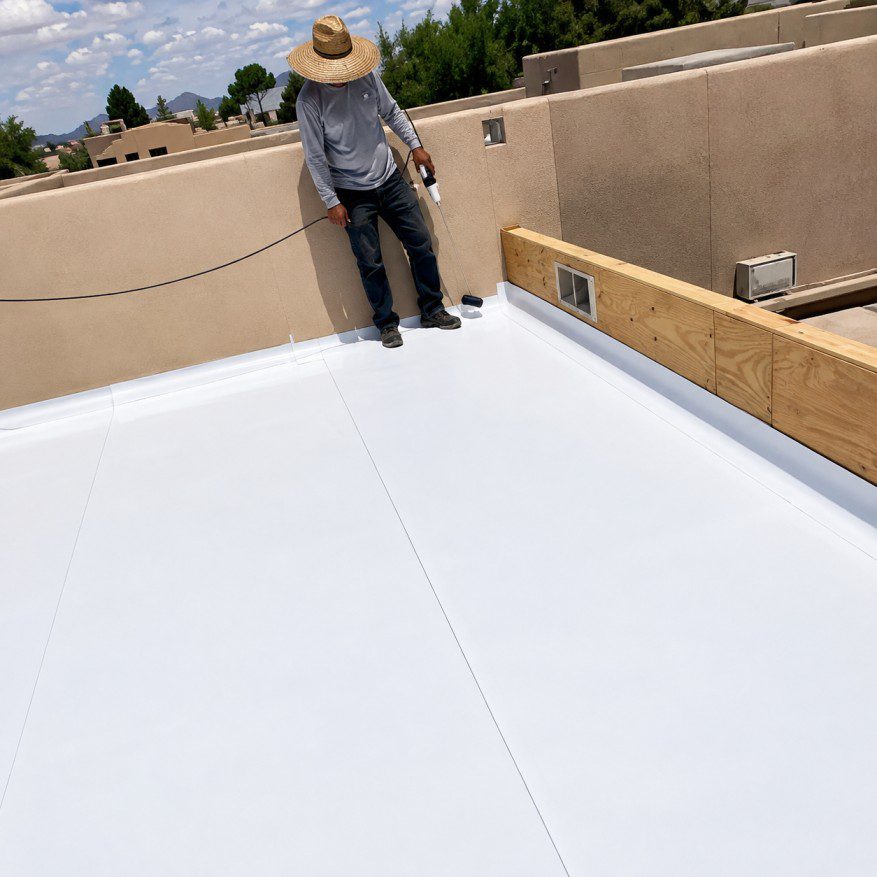
Flat Roof Repair vs Replacement in New Mexico: TPO, EPDM, and the Real Decision Factors
A flat roof rarely fails all at once. It fails in patches, a soft spot near a drain, a seam that’s started to lift, a ceiling stain that shows up after the first real monsoon storm. The question property owners actually need answered isn’t “what’s wrong,”; it’s “does this get patched, or does the whole membrane need to come off.” That decision changes depending on the roof’s age, the membrane type, and how the damage is spread across the surface. Here’s how to think through it, with an honest look at TPO and EPDM, the two membranes doing most of the work on New Mexico’s flat and low-slope roofs. Why Flat Roofs Fail Differently in New Mexico Flat and low-slope roofs handle water differently than a pitched shingle or tile roof. Instead of shedding rain immediately, they rely on gentle slope and interior drains to move water off the surface over time. In most of the country, that’s a manageable design. In New Mexico, it runs into two specific stressors. The first is UV load. Most of New Mexico sits at elevation — Albuquerque and Rio Rancho above 5,000 feet, Santa Fe and Taos higher still, which means more intense, near-constant sun exposure than a lower-altitude climate produces. Membrane materials degrade faster under that kind of radiation than manufacturer lab tests sometimes suggest, particularly at seams and flashing details. Santa Fe and Taos add a second variable on top of that: overnight freeze-thaw cycling, which stresses seams differently than the steady heat load Albuquerque and Las Cruces see. The second is the monsoon window. A roof that sits dry for ten months can take a serious amount of water in a short July-to-September stretch. Ponding at drains, ridging at seams, and granulated membrane that’s lost its flexibility all turn into active leaks once that seasonal rain arrives. A flat roof that looked fine in May can be leaking by August, and the underlying cause is usually damage that had been building for a year or more. Signs a Repair Still Makes Sense Not every leak means a new roof. If the membrane is under 12 to 15 years old and the damage is isolated, targeted repair is usually the right call. Good candidates for repair include a single failed seam, a punctured membrane from foot traffic or dropped equipment, flashing that’s pulled away at a parapet wall, or a localized area of ponding water that a contractor can correct with tapered insulation instead of a full tear-off. A roofing contractor who actually gets on the roof, not just a drive-by estimate, can usually tell within one inspection whether the substrate underneath is still sound. If the insulation board is dry and the membrane’s overall condition is decent, repair extends the roof’s life at a fraction of replacement cost. When Repair Stops Making Financial Sense Repair becomes the wrong move once damage is widespread rather than isolated. A few patterns signal that a full replacement is coming, whether this season or next. Multiple active leak points across different areas of the roof usually point to membrane-wide degradation, not a single bad seam. Widespread granule loss, chalking, or brittleness on an older membrane means the material itself has aged out, and further patching just delays an inevitable tear-off. Recurring leaks in the same general area, even after repair, often mean water is tracking under the membrane from a source that hasn’t been located yet. Age matters too. TPO systems typically run 15 to 25 years of service life in this climate, and EPDM can run slightly longer with good maintenance. A membrane past the 20-year mark that’s showing more than one of these signs is a better candidate for replacement than another round of patching. TPO Roofing: What It Is and Where It Performs Best TPO, short for thermoplastic polyolefin, is a single-ply membrane that’s become the default choice for new flat roof installations across New Mexico over the past decade. It comes in wide sheets that get heat-welded at the seams, which creates a stronger bond than the adhesive seams used on older membrane types. TPO’s biggest advantage here is reflectivity. Most TPO membranes come in white or light gray, which reduces surface temperature and cuts down on heat transfer into the building below. For a commercial property paying a summer cooling bill in Albuquerque or Las Cruces, that reflectivity is a real operating cost consideration, not just a marketing point. The tradeoff is formulation consistency. TPO is a relatively newer material category compared to EPDM, and membrane quality varies more between manufacturers. A cheap TPO product installed by an inexperienced crew can underperform its rated lifespan by years. Installer experience with hot-air welding technique matters as much as the membrane brand. EPDM Roofing: The Other Common Membrane EPDM, or ethylene propylene diene monomer, is a rubber membrane with a long track record — it’s been used on flat roofs since the 1960s. It’s typically black, which makes it less reflective than TPO, but the material itself is known for flexibility and long-term durability once properly installed. EPDM handles thermal movement well. As a roof expands and contracts through New Mexico’s wide daily temperature swings, EPDM tends to stay flexible rather than becoming brittle, which is one reason older EPDM roofs sometimes outlast their original warranty terms. Seams are the weak point. Traditional EPDM uses adhesive-bonded seams rather than heat-welded ones, and seam failure is the most common cause of EPDM leaks. Newer EPDM products with factory-applied tape seams have narrowed this gap with TPO, but installation quality still matters more here than with a welded system. TPO vs EPDM: How They Actually Compare Here Neither membrane is universally better. The right choice depends on the building. For a commercial building with meaningful cooling loads, a retail space, an office, a warehouse with rooftop HVAC — TPO’s reflectivity usually wins out on energy performance. For a smaller residential flat roof or an outbuilding without major cooling demands, EPDM’s durability and