

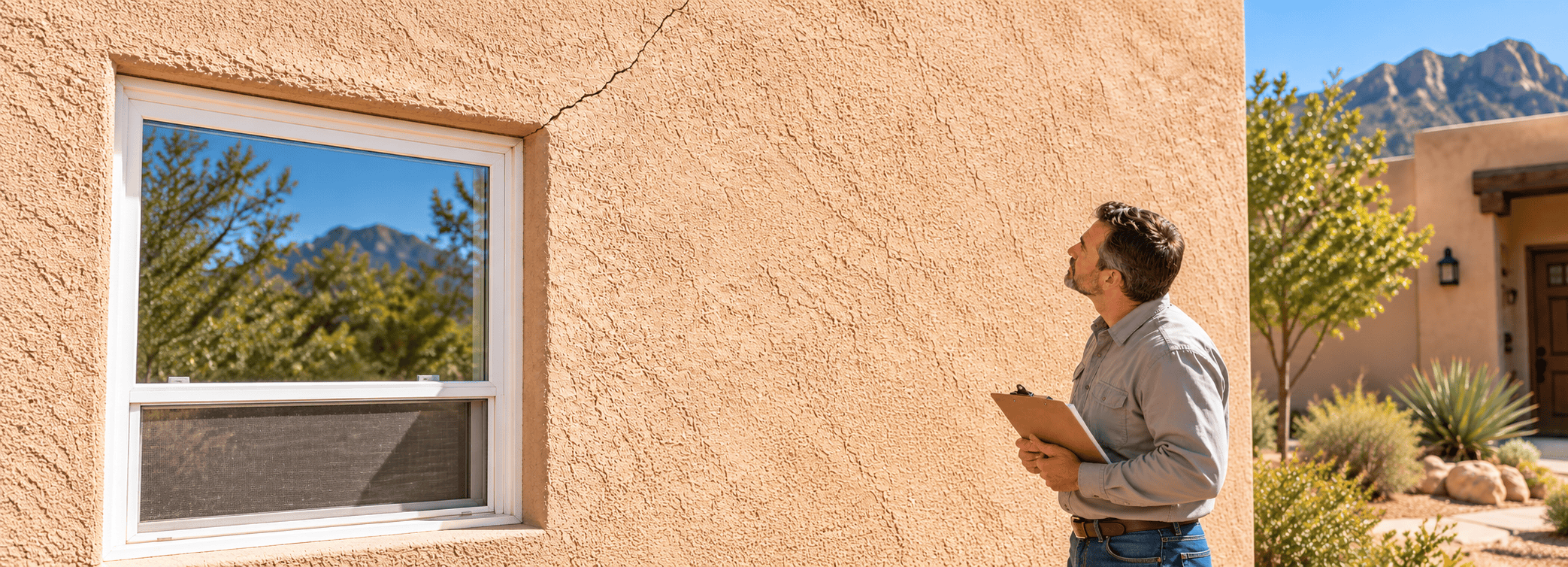
Why Stucco Cracks Around Windows and Doors in New Mexico
A thin crack running from a window corner can leave you wondering whether the wall needs a small repair or a closer inspection. Stucco cracks around windows can develop when the finish or the wall behind it moves, when new material shrinks during curing, or when installation details leave an opening vulnerable. Moisture can also contribute to deterioration around the frame. The crack’s appearance offers clues, but it cannot confirm the cause. A fine line that stays unchanged deserves a different assessment from one that keeps widening, returns after repair, or appears alongside dampness indoors. Understanding those differences helps you decide what to check before covering the damage. Why Do Stucco Cracks Around Windows Start at the Corners? Windows and doors interrupt an otherwise continuous wall. Their corners are places where stresses can concentrate as the surrounding materials move. Cement-based stucco is relatively brittle, so it can crack when those stresses exceed what it can accommodate. That helps explain why a line sometimes extends diagonally from the corner of an opening. The Stucco Manufacturers Association notes that some cracking is expected and commonly appears around window and door corners. However, a diagonal crack does not automatically mean the foundation is failing. Movement in framing or sheathing, shrinkage, and details around the opening can also contribute. Its history matters: did it appear after a window replacement, remain unchanged for years, or recently begin growing? Common Stucco Crack Causes Around Openings Similar-looking cracks can develop for different reasons. Before choosing a repair material, it helps to understand what may be stressing the area. Movement in the Stucco, Frame, or Wall Behind It Materials expand and contract with temperature changes. Wood framing and sheathing can also change dimensions as their moisture content changes. These movements can place stress on the stucco around an opening. Industry guidance on stucco cracking identifies framing, sheathing, thermal effects, and soil movement among possible contributors. A surface patch may crack again if the underlying movement continues or the surrounding detail cannot accommodate it. Shrinkage During Installation or Repair Cement-based stucco can develop cracks as it cures. Application conditions and curing practices influence the result, particularly when fresh material dries too quickly. This is worth considering when cracks appear soon after new stucco work or around a recently patched opening. The timing gives the contractor useful information, although it does not establish the cause by itself. Problems With Reinforcement or Joint Details The reinforcement, trim, and joints around an opening help the stucco assembly handle stress. Missing or unsuitable details can leave vulnerable areas. The correct arrangement depends on the wall and stucco system. Control joints can help reduce cracking in cement plaster, but SMA guidance makes clear that they do not guarantee a crack-free surface. Failed Sealant or Poor Water Management A gap between the frame and stucco may be a failed sealant joint rather than a crack through the wall finish. That distinction matters because the repair must address the affected detail. Window flashing has a separate role: it directs water outward and works with the wall’s protective layers. Building America guidance on window and door flashing explains this integration. Adding caulk to the visible surface cannot be assumed to fix a concealed flashing problem, especially when staining or interior dampness accompanies the damage. How New Mexico Weather Can Add to the Problem A wall’s exposure affects the stresses it experiences. Sun warms exterior surfaces, while cooling temperatures allow materials to contract. Those changes can contribute to cracking where the wall assembly has limited ability to accommodate movement, including around openings. Dry weather does not eliminate moisture concerns. The National Weather Service describes New Mexico’s monsoon as a seasonal increase in summer precipitation, largely through thunderstorms. Rain can expose weaknesses in window joints, flashing, and other water-management details. Where freezing conditions occur, moisture within susceptible materials can contribute to freeze–thaw deterioration. However, a crack appearing after winter does not prove that freezing caused it. Its location, progression, and surrounding condition still need assessment. Stucco cracks around windows therefore deserve attention beyond their appearance during dry weather. Staining or dampness that develops after rain gives a contractor useful information about a possible water-entry problem. What About Stucco Cracks Around Doors? Door openings can experience similar stresses, with cracks extending from upper corners or separation appearing along frame edges. A repaired section around a replacement door may also crack if movement or installation details remain unresolved. Look at what has changed alongside the exterior wall cracks. Does the door suddenly rub against the frame? Has a previously repaired line reopened? Is there staining near the threshold after rain? These observations do not establish a structural problem. A sticking door can have several causes, including hardware or alignment issues. Nevertheless, a new operating problem appearing alongside growing cracks is worth reporting during an inspection. Which Stucco Cracks Around Windows Need Closer Inspection? Width is one useful observation, but it cannot tell the whole story. A narrow crack accompanied by interior dampness may deserve more immediate attention than a more visible line that has remained unchanged. Use the following signs to decide what information to collect and when to seek advice. What you notice Why it matters Practical next step A fine crack with no observed change or nearby symptoms It may involve surface cracking or minor movement; appearance alone cannot confirm this Photograph it and watch for changes A gap where sealant meets the frame The perimeter joint may need attention Have the joint and surrounding details assessed A crack that widens, extends, or returns after repair The condition causing it may still be present Arrange an inspection before another patch Interior dampness or staining after rain Water may be entering near the opening or travelling from elsewhere Seek prompt assessment and report when it happens Bulging, loose, or crumbling stucco Damage may extend beyond a simple surface line Have the area inspected before cosmetic work An inspection should consider the stucco system as well. Traditional cement stucco and