

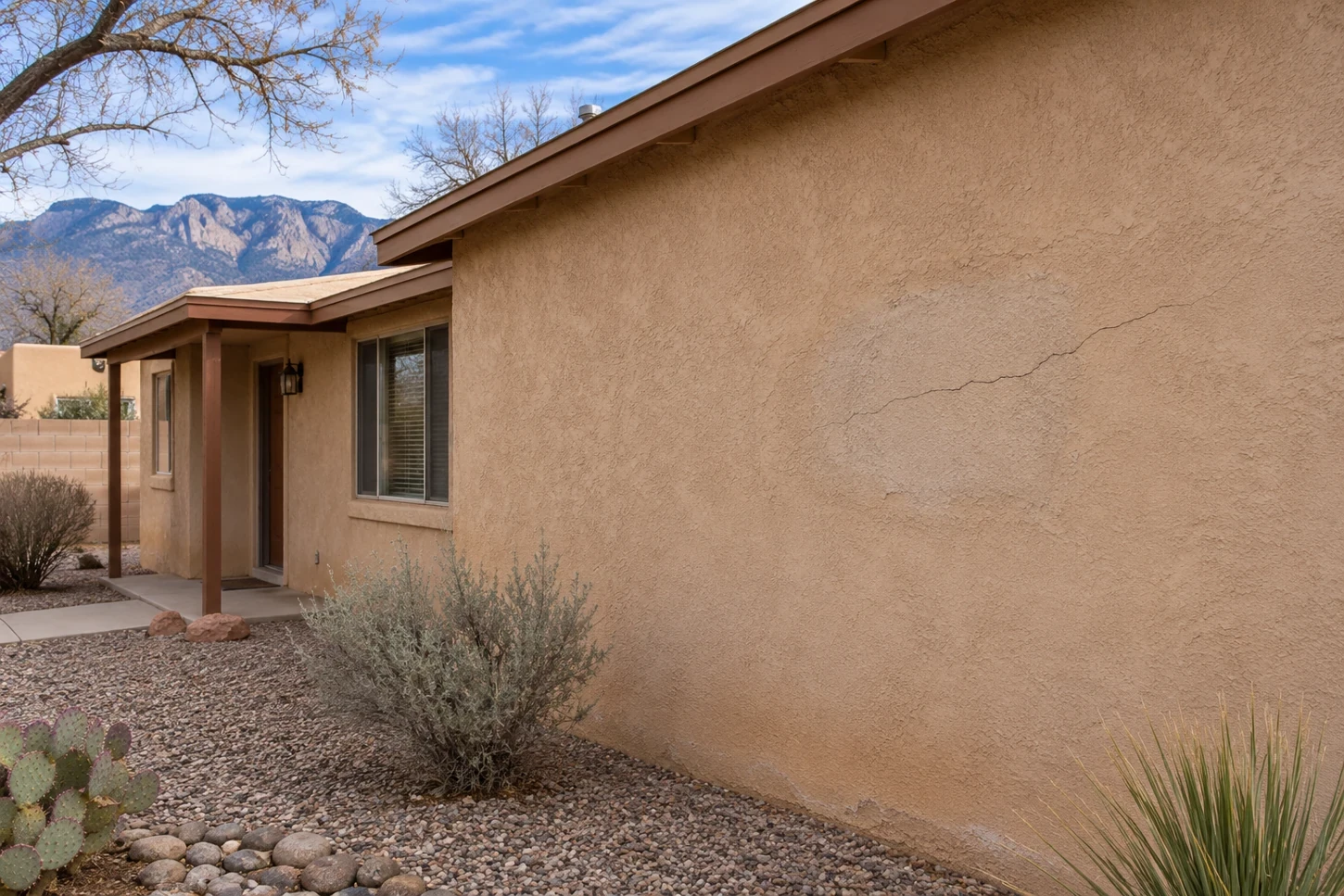
What Causes Recurring Stucco Cracks in Albuquerque?
A stucco crack comes back when the wall is still moving, water is still getting in, or the old patch never bonded. Those are the three main causes of recurring stucco cracks, and each needs a different fix. Filling and painting the line again treats none of them. Where the crack returns tells you which cause to check first. This guide is for Albuquerque homeowners who have already paid for one stucco crack repair and don't want to pay for the same one twice. Read Where the Crack Came Back Compare the new line with the old one before anyone fills it. Each pattern points to one of the causes of recurring stucco cracks. What You See Likely Cause What to Check A line through the middle of the old patch The wall is still moving at that spot A joint, a change in backing material, or framing movement behind it A line tracing the edge of the patch The patch lost its bond Loose plaster at the edges, surface prep, and patch material A crack beside stains or peeling finish Water is getting in above or collecting below Sealant, flashing, roof runoff, sprinklers, and the weep screed A crack where an addition meets the house Two structures moving differently Whether a joint exists there, or the stucco spans the seam Take a wide photo that shows the crack's place on the wall, then a close photo with a ruler beside it. Repeat both from the same spot every few weeks. Note when the crack came back, what the last repair was, and whether stains show up after rain or irrigation. That record helps a contractor find the cause faster than looking at the crack once. Wall Movement Keeps Stucco Cracks Returning Wall movement is one of the main causes of recurring stucco cracks. Cement stucco is hard and brittle, so it can't stretch with the wall. The Portland Cement Association's stucco repair guide splits cracks into two types. A static crack has stopped moving and can be filled with a rigid material. A moving crack will split any rigid filler again. The usual fix is to route it, or cut a groove along it, and fill the groove with a flexible sealant. Stucco wall movement often starts where an addition meets the original house or where the stucco crosses from one backing to another, such as from block to a framed wall. That backing is called the substrate. A contractor needs to know what the stucco covers before choosing a repair. Soil can move the wall too. The New Mexico Bureau of Geology and Mineral Resources documents collapsible soils in the state, which settle when they get wet. If the crack sits near a downspout, a leaking irrigation line, or a spot where runoff pools, say so during the inspection. If the crack keeps widening, or you also see new interior cracks or doors that start to stick, a licensed structural engineer should check the movement before any stucco work. Check Whether the Old Repair Bridged a Joint A straight seam in stucco may be a joint, not damage. A control joint divides the plaster into panels so it can shrink without cracking at random. An expansion joint lets separate parts of the building move. If a hard patch filled a joint, the crack will come back at the joint or right beside it. On walls built over lath, the PCA guide lists the ASTM C1063 panel limits. Each wall panel should be no more than 144 square feet, joints no more than 18 feet apart, and no panel longer than 2.5 times its width. Joints should also sit over movement joints in the wall behind. A long wall with no joints at all is a common reason one crack keeps returning. The IIBEC paper on stucco jointing explains these rules in more detail. Ask how the new repair will treat any joint that lines up with the crack. If there's no visible joint, the contractor can check whether one belongs there before proposing a patch. Trace the Water Above and Below the Crack A wet spot can show up well below where water gets in. Start above it and look for gaps where materials meet, such as a roof edge, a canale, or a light fixture. Flashing, the metal or membrane that turns water out at seams, is usually hidden behind the finish. If the stain starts below a roof-to-wall joint, you may need a roofing assessment before the stucco work. For cracks at openings, see our guide to stucco cracks around windows and doors. Then check the base of the wall. On framed walls, New Mexico's residential code (14.7.3 NMAC) requires a weep screed, a metal or plastic strip at the bottom of the stucco that lets trapped water drain out. It must sit at least 4 inches above soil or half an inch above paving, and its weep holes must stay open. Raised gravel beds, new pavers, or a past patch can bury it. Sprinklers aimed at the wall keep the base wet too. If stains stay dark long after the rest of the wall dries, water may be behind the finish. Our list of signs of stucco moisture damage shows what to look for. Fix the water path before closing the wall again. Check What the Patch Was Bonded To When a crack outlines the old repair, the patch likely never held. Common stucco repair problems include patching over loose plaster, a dusty surface, or old paint, and using a mix that is harder or softer than the wall around it. The IIBEC paper on stucco failures makes the same point: find the cause before you design the repair. A contractor can tap the wall to find hollow areas and may open a small section to see what failed. Ask what will be removed, what can stay, and how the new patch will be held in place. Talk about matching color and texture only