

Signs Your Home May Need an Electrical Panel Upgrade
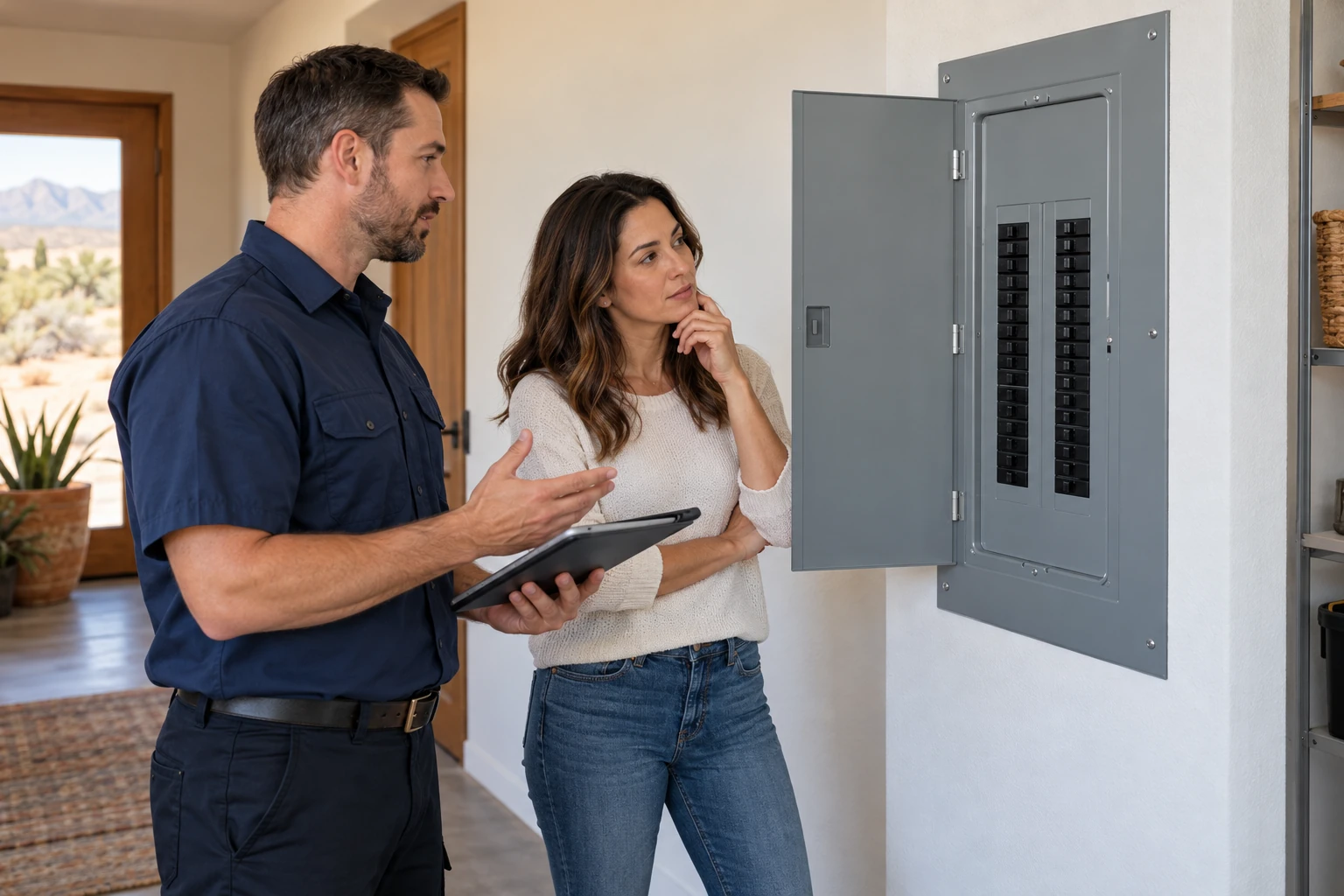
A breaker that keeps tripping, lights that dip when the air conditioner starts, or plans for an EV charger can all point to your electrical panel. They don’t all point to the same fix. One home needs a circuit repaired, another needs more breaker space, and a third needs a larger electrical service from the utility. This guide covers the most common signs you need an electrical panel upgrade, what each one usually means, and what to ask before you approve the work. If you are already budgeting, our guide to electrical panel upgrade cost in New Mexico covers pricing, permits, and PNM coordination. If you see smoke, sparks, or flames, get out first. Call 911 from outside, and don’t open the panel or try to shut it off during an active hazard. The U.S. Fire Administration notes that residents may have less than two minutes to escape once a smoke alarm sounds. Panel, Breaker, or Service: Know What Needs Fixing The panel distributes power to your circuits. Each breaker protects one circuit. The service is the supply from the utility, including the meter, the service conductors, and the amperage your home is rated to draw. Replacing the panel box alone does not add amperage. A service upgrade, such as moving from 100 to 200 amps, changes the meter equipment and usually involves the utility. A subpanel adds circuit space but no extra capacity. When you compare estimates, ask which of these the proposal actually fixes. Older homes run into these limits most often. A 2026 Berkeley Lab study estimates that 100-amp panels make up 55% of U.S. single-family panels, compared with 29% for 200 amps. An earlier Berkeley Lab survey found homes built before 1960 were five to nine times more likely than post-2000 homes to have 100 amps or less. Electrical Panel Warning Signs Worth a Closer Look The Electrical Safety Foundation estimates that electrical malfunctions cause about 35,000 home fires each year. A Breaker Keeps Tripping A trip means the breaker did its job. When the same breaker keeps tripping, the cause may be circuit overload, a failing appliance, or a wiring fault. GFCI and AFCI breakers also trip on ground faults and arcing, as ESFI’s breaker guide explains. Note what was running and which rooms lost power. A space heater and a microwave sharing one kitchen circuit tells an electrician something very different from trips in several rooms at once. Don’t keep resetting a breaker that trips again right away. Never swap in a higher-rated breaker to stop the trips, because the breaker has to match the wire it protects. Lights Dim or Flicker When Big Equipment Starts ESFI lists dimming lights when other devices turn on as a sign of an overloaded system. During an Albuquerque summer, watch whether lights dip each time the refrigerated air cycles on, or, in homes on a private well, when the pump starts. One flickering fixture usually points to the fixture or its connection. Dimming across several rooms points to the circuit, the panel, or the incoming supply. A panel upgrade won’t fix a loose fixture or a utility-side problem, so have the cause found first. Buzzing, Heat, a Burning Smell, or Scorch Marks The CPSC Guide to Home Wiring Hazards flags sizzling or buzzing sounds, parts that are hot to the touch, and the smell of hot insulation. Don’t remove the panel cover or touch equipment to check its temperature. Stop using whatever is affected and get it inspected promptly rather than waiting for the next remodel. Water or Corrosion In or Around the Panel Monsoon storms, a roof leak, a leaking water heater, or a cooler line dripping down an exterior wall can all put water near electrical equipment. Don’t open or touch a wet panel, and don’t assume it is safe once the outside dries. NEMA publishes criteria for deciding whether water-damaged equipment can safely return to service. Then fix the water source, whether that means roof repair or plumbing work, so new equipment isn’t exposed to the same problem. Old Equipment With No Safe Repair Path Fuse boxes, panels with no approved replacement breakers, and DIY changes such as two wires under one breaker screw are the equipment problems most likely to justify replacement. Among the signs you need an electrical panel upgrade, a documented equipment limitation carries far more weight than the panel’s age. Ask for the make, model, and condition, and whether listed replacement parts still exist. A breaker that physically fits is not automatically approved for that panel. More Appliances Can Change the Capacity Question Electrical panel capacity depends on the service rating and the calculated household load, not on how many empty slots you have. New load is one of the easiest signs you need an electrical panel upgrade to miss, because nothing looks wrong. A home with no faults still needs a review before a large new appliance goes in. Common additions in New Mexico homes include: Here is what that means in numbers. The Alternative Fuels Data Center says most residential Level 2 EV chargers run at up to 30 amps and need a dedicated 40-amp circuit. A DOE-funded panel guide notes that electricians recommend keeping load under 80% of service capacity. On a 100-amp service, that leaves about 80 amps of working room. A charger pulling 30 amps for hours uses more than a third of it before the range, dryer, or air conditioner comes on. Space runs out too. Berkeley Lab estimates that at least 20% of panels of every size have no free breaker space. The Department of Energy’s Building America electrical panel calculator shows how appliance wattage and panel amperage interact, based on NEC Article 220.83. Don’t add up breaker numbers to size your service, because that isn’t a load calculation. Share nameplate ratings for the equipment you plan to add instead. Some homes can avoid a service upgrade entirely. Schneider Electric, a panel manufacturer, says smart panel load shifting can help prevent the