General Contractors License Gb98

Insured And Bonded

Blog

Category: Uncategorized

bathroom-remodelling-cost-new-mexico
Uncategorized

Bathroom Remodel Cost in New Mexico: What to Budget for a Full Renovation in 2026

A bathroom remodel can transform one of the most-used spaces in a home. It can also become one of the most expensive projects a homeowner undertakes if cost expectations are not calibrated to local market realities before any work begins. The bathroom remodel cost in New Mexico spans a wide range because project scope varies so dramatically. A powder room refresh and a full primary bathroom gut renovation are both called remodels, but they share almost nothing in terms of cost, timeline, or complexity. This guide breaks down real 2026 pricing for New Mexico homeowners, covers every common project type, and explains what moves costs up or down so you can plan with confidence. Average Bathroom Remodel Costzs in New Mexico Bathroom remodel budgets fall into four general tiers, each representing a meaningfully different scope of work and outcome. Small Bathroom Remodels: $5,000 to $12,000 At this level, work focuses on surface updates rather than structural or plumbing changes. New fixtures, updated lighting, fresh tile on the floor or shower surround, and a replacement vanity with countertop are typical inclusions. Existing drain and supply locations stay in place. This budget works well for guest bathrooms, secondary hall bathrooms, and smaller powder rooms where cosmetic improvement is the primary goal. Mid-Range Remodels: $15,000 to $30,000 A mid-range bathroom remodel usually includes a fully tiled shower or tub surround, a new vanity, updated plumbing fixtures throughout, recessed lighting with a ventilation fan, and possibly a freestanding tub. Minor plumbing adjustments, such as moving a drain a foot to better center a shower floor, are common at this level. This budget handles most full-sized family and primary bathrooms in median-value Albuquerque homes effectively. High-End Remodels: $35,000 to $60,000 High-end renovations typically include large-format porcelain or natural stone tile, frameless glass shower enclosures, custom-built vanity cabinetry, heated tile floors, a freestanding soaking tub, and updated electrical for lighting and smart features. Layout changes involving supply line relocation, drain stack moves, or non-load-bearing wall removal fall into this range. Primary bathrooms in homes valued at $500,000 or more in the Albuquerque metro commonly land here. Luxury Renovations: $65,000 and Above Luxury bathroom projects combine premium material selections with extensive tile work, steam showers, body spray systems, radiant heat throughout, built-in millwork, and potentially a structural room expansion. These projects appear most frequently in Santa Fe’s high-end residential market, custom builds in the East Mountains, and larger homes across Albuquerque’s North Valley communities. Major Cost Factors in a New Mexico Bathroom Remodel Knowing what drives cost allows you to make informed trade-offs when building your project budget. Labor: Labor accounts for 40 to 50 percent of total project cost in most New Mexico bathroom remodels. Trade rates for licensed plumbers, electricians, and tile installers in Albuquerque range from $65 to $120 per hour depending on specialization. Tight spaces, complex tile patterns, and older homes with outdated systems all add labor hours. Tile: Tile is often the highest single material line item. Basic ceramic runs $2 to $5 per square foot. Porcelain, which handles New Mexico’s temperature swings and wet environments better, runs $4 to $12. Natural stone, large-format slabs, and specialty mosaics can exceed $25 per square foot. Installation labor adds $8 to $15 per square foot, more for intricate patterns or heated floor systems. Vanities and Countertops: Stock vanities from home improvement centers start around $300. Semi-custom and fully custom configurations with solid surface or natural stone tops run $800 to $4,000 for a 60-inch double vanity. Quartz countertops are the most popular selection in mid-range Albuquerque remodels due to durability and low maintenance requirements. Plumbing: Simple fixture swap-outs cost $150 to $400 each installed. Moving drain locations or supply lines costs considerably more. Rerouting a drain stack in a slab-on-grade home, which is the predominant construction type across Albuquerque’s residential stock, requires core drilling and typically adds $1,500 to $4,000 to the project. Electrical: Standard bathroom electrical updates including GFCI outlets, lighting circuits, and a ventilation fan run $400 to $1,200. Adding heated floor systems, smart mirror circuits, or dedicated spa features pushes that range higher. Permits: Bathroom remodel permits in Albuquerque for projects involving plumbing or electrical work typically cost $200 to $500. Your contractor should include permit applications in the standard project scope, not treat them as optional extras. Layout Changes: Moving walls, relocating a shower or tub drain, or expanding the bathroom footprint multiplies project cost substantially. Budget an additional $3,000 to $10,000 for any meaningful structural or plumbing reconfiguration, depending on what is being moved and how the home is built. Bathroom Remodel Cost Breakdown by Project Type Guest Bathrooms Guest bathrooms in New Mexico homes typically measure 35 to 60 square feet. A full update replacing tile, vanity, fixtures, and lighting without modifying the layout runs $8,000 to $18,000. The smaller footprint keeps tile quantities manageable, which is the variable most sensitive to material selection choices. Primary Bathrooms Primary bathrooms in Albuquerque homes commonly range from 80 to 150 square feet. A complete mid-range remodel with a tiled shower, soaking tub, double vanity, and updated lighting runs $22,000 to $45,000. High-end finishes, layout changes, or room additions push this above $55,000. Powder Rooms Powder rooms involve only a toilet and vanity without shower or tub, which makes them the most contained remodel type. A quality powder room refresh in New Mexico runs $4,000 to $8,500. Designer fixtures, pedestal sinks with specialty tile feature walls, or custom millwork can push a powder room project to $12,000 or more. Accessibility Upgrades ADA-compliant and aging-in-place modifications are a growing segment of New Mexico bathroom remodel work. Full accessibility upgrades typically include a curbless roll-in shower, grab bars, a widened doorway, and a comfort-height toilet. Costs for a complete accessibility bathroom remodel run $12,000 to $30,000, depending on existing conditions. The U.S. Access Board ADA bathroom guidelines define the clearance and layout requirements for fully compliant installations. Projects requiring structural doorway widening or drain relocation sit at the higher end of that
/spanish-tile-roof-repair-cost-new-mexico/
Uncategorized

Spanish Tile Roof Repair and Replacement in New Mexico: Costs, Contractors & What to Expect

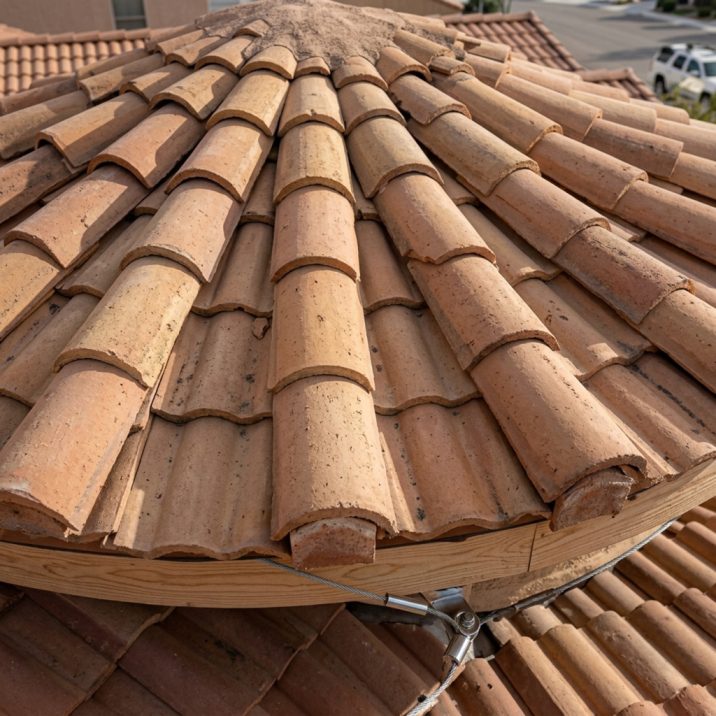
Clay tile roofs are one of the most recognizable features of New Mexico residential architecture. From Albuquerque’s historic Nob Hill neighborhoods to Santa Fe’s hillside estates, Spanish tile defines the regional look, and for good reason. The material suits the climate, complements the regional style, and outlasts most alternatives by decades when properly maintained. That durability does not make tile roofs maintenance-free. Tiles crack from hail, freeze-thaw cycling, or foot traffic during HVAC service calls. Underlayment deteriorates silently beneath intact-looking tiles over time. Flashing around chimneys and penetrations works loose. When any of these problems appear, New Mexico homeowners need accurate numbers before they pick up the phone. This guide covers real Spanish tile roof repair cost in New Mexico for 2026, helps you decide when repair makes sense versus full replacement, and explains what the project process looks like from first call through final inspection. Why Spanish Tile Roofs Are Common in New Mexico Clay tile fits New Mexico homes on every level, architectural, climatic, and practical. The barrel and S-curve profiles associated with Spanish Colonial and Pueblo Revival construction have defined regional building for more than a century, and that tradition continues in new builds throughout the Albuquerque metro, Rio Rancho, and the East Mountains. Beyond aesthetics, clay performs exceptionally well in the high-desert environment. New Mexico’s intense solar radiation, low ambient humidity, and dramatic day-to-night temperature swings can degrade lesser materials faster than their rated lifespans. Clay tile handles UV exposure without breaking down chemically. It does not warp, rot, absorb moisture, or corrode. In a climate where asphalt shingles often reach the lower end of their expected service life due to UV intensity, tile offers a meaningful longevity advantage. Clay also provides natural thermal mass. The tile absorbs heat during the day and releases it slowly at night, which moderates attic temperatures during New Mexico summers. The airspace beneath a properly installed barrel tile system enhances that benefit further. Typical clay tile lifespans in New Mexico range from 40 to 60 years with routine maintenance. Some well-maintained installations exceed that range significantly. The limiting factor is almost never the tile itself. The underlayment beneath and the metal flashing at penetration points tend to fail first, usually after 20 to 30 years, often while the tile above looks perfectly fine from the street. Spanish Tile Roof Repair Costs in New Mexico Repair costs depend heavily on what has failed and how much of the roof is affected. These ranges reflect realistic 2026 pricing across the New Mexico market. Broken Tile Replacement: $200 to $900 Replacing individual cracked or broken tiles is the most straightforward repair. Labor to remove the damaged piece, source a matching replacement, and set it correctly typically runs $200 to $450 for a single tile. Replacing three to six tiles in one zone is more efficient and often totals $400 to $900. The practical challenge is matching aged tile. Discontinued profiles or color shifts over decades can make finding an exact match difficult and occasionally require sourcing alternatives that blend well rather than match perfectly. Underlayment Repair: $600 to $1,800 When the felt or synthetic underlayment beneath the tiles has failed in a localized section, targeted repair is possible without a full replacement. The process involves carefully lifting tiles in the affected zone, replacing the underlying membrane, and reinstalling the tiles. Costs run $600 to $1,800 depending on area size and how many tiles break during careful removal. Underlayment on homes built before the mid-1990s typically used organic felt, which the National Roofing Contractors Association recognizes as having a significantly shorter effective service life than modern synthetic membranes. If your roof is from that era, a section repair may address one zone while broader deterioration exists elsewhere beneath intact-looking tile. Flashing Repair: $350 to $900 Flashing seals the junctions where the roof meets vertical surfaces, including chimneys, skylights, vent stacks, and parapet walls. These junctions are among the most common water entry points on any roof. Reflashing a chimney or vent penetration on a clay tile roof typically costs $350 to $900. Full chimney reflashing on larger or more complex installations can run higher. Contractors must work carefully around adjacent tiles to avoid cracking them during the replacement process. Leak Repair: $400 to $1,200 Active leaks on Spanish tile roofs often have multiple potential sources. The tile may be intact while water enters through a failed boot seal, cracked flashing, or deteriorated underlayment at a low point. Leak diagnosis and repair typically costs $400 to $1,200, not including any associated interior remediation. Finding the actual entry point on a tile roof requires specific experience with clay systems. Contractors unfamiliar with tile installations sometimes misidentify the source, which leads to repeat callbacks and additional expense. Valley and Storm Damage Repairs: $500 to $4,500 Roof valleys channel significant water volume during New Mexico’s monsoon season, which runs July through September. Failed valley metal allows water to work beneath adjacent tiles. Valley repair or replacement typically costs $500 to $1,500 depending on valley length and configuration. After hail events, multiple tiles may crack across large sections of a roof. Storm damage repairs covering a significant surface area can run $1,500 to $4,500 or more, which shifts the repair-versus-replace calculation considerably. When Repair Makes Sense vs. Full Replacement This decision is one of the most consequential a New Mexico homeowner faces with a tile roof. Several factors shift the calculation clearly in one direction. Roof Age: Tile roofs under 25 years old with localized damage are almost always better candidates for targeted repair. Beyond 30 years, the underlying components, especially the underlayment and original metal flashing, warrant a broader evaluation before committing to repair costs. Extent of Tile Damage: When fewer than 15 to 20 percent of tiles are damaged, repair is typically efficient and cost-effective. Damage affecting 30 percent or more of the roof surface shifts the economics toward replacement, particularly when scattered repair labor across the field approaches replacement cost anyway. Underlayment Condition: This is

stucco-resurfacing-cost-New-Mexico
Uncategorized

Stucco Resurfacing vs. Full Replacement: Which Does Your New Mexico Home Need?

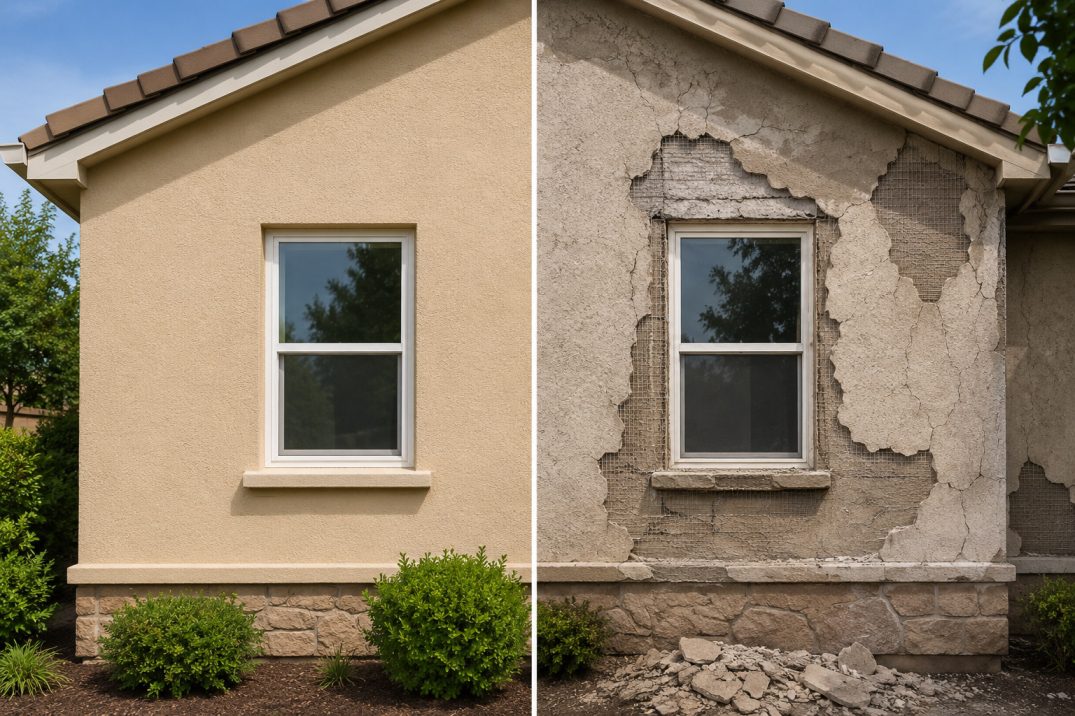
Stucco begins to show its age in ways that look worse than they are. Faded color, a network of hairline cracks, a patchy section near a roofline: property owners who contact a stucco contractor often believe they are facing a full replacement. More often than not, they are not. But the opposite mistake happens too. A contractor who slaps an elastomeric coat over a moisture-compromised wall has created a moisture trap, not a repair. That is the scenario that turns a $4,000 resurfacing job into a $22,000 substrate rebuild two years later. The right call depends on what is happening beneath the finish coat. Understanding the difference between stucco resurfacing and full stucco replacement. How New Mexico’s climate accelerates certain types of failure is the framework every homeowner needs before spending a dollar. Quick answer: If your stucco substrate is structurally sound and dry, resurfacing is likely the correct scope. If there is moisture infiltration, delaminated base coats, or failed lath, full replacement is the appropriate path. What Stucco Resurfacing Actually Is Stucco resurfacing means applying a new finish coat (and in some cases a thin color coat or textured acrylic layer) over an existing stucco system that is still performing structurally. The base coat (scratch coat and brown coat in a traditional three-coat system) remains in place. Only the outer layer is refreshed. Resurfacing can accomplish several things at once: It is not a repair for structural problems. Resurfacing works on walls that have reached end-of-finish-coat life but still have a sound, dry base underneath. For homeowners across New Mexico, a quality resurfacing job can extend exterior stucco service life by 10 to 20 years when properly applied over a sound substrate. See our stucco services for a closer look at the system types we work with across the state. What Full Stucco Replacement Involves Full replacement means removing the existing stucco system entirely, back to the lath, wire mesh, or sheathing, and rebuilding the wall system from the substrate out. In a traditional three-coat cement stucco application, this means a new scratch coat, brown coat, and finish coat. In an EIFS (synthetic foam-core) system, it means removing the foam board, resetting trim, and reinstalling the full system. Full replacement is warranted when: This is a significantly more disruptive and expensive scope of work. It also uncovers any underlying issues with flashing, waterproofing membranes, and window integration that a resurfacing job would simply cover up. That trade-off is simultaneously its greater cost and its greater long-term value. Stucco Resurfacing Cost vs. Replacement Cost in New Mexico Pricing in New Mexico varies by region, system type, substrate condition, and the specific scope of prep work required. These ranges reflect real project conditions across the state in 2026: Scope Description Cost per Sq Ft (NM) Typical Total Range Color Coat Only Elastomeric or acrylic finish coat over sound existing stucco $3.00 – $5.00 $4,500 – $10,000 Full Resurfacing Surface prep, crack repair, full finish coat reapplication $5.00 – $7.50 $7,500 – $18,000 Partial Replacement Remove and replace damaged sections, blend into existing $8.00 – $13.00 $5,000 – $20,000+ Full 3-Coat Replacement Complete removal down to lath, full rebuild $10.00 – $18.00 $18,000 – $45,000+ EIFS Full Replacement Foam board, base coat, mesh, finish: full reinstallation $12.00 – $22.00 $22,000 – $55,000+ Price drivers in New Mexico include access difficulty (single-story vs. multi-level), the age and type of the existing system, whether window and door flashing needs to be reset during the work, and, critically, moisture conditions in the wall. A home in Las Cruces with UV-driven surface delamination on sound dry walls prices very differently than a Santa Fe property where freeze-thaw has damaged the brown coat layer. For an accurate number on your specific property, our team provides free on-site estimates. Contact us through our roofing and exterior services page or the stucco services contact form. How New Mexico’s Climate Shapes the Decision No other factor influences a stucco damage assessment more than where in New Mexico a home is located. The state’s climate variation between its lowest and highest elevations (from Las Cruces in the Chihuahuan Desert to Taos at over 6,900 feet) creates fundamentally different stucco failure patterns. Albuquerque: Thermal Cycling and Monsoon Infiltration Albuquerque’s stucco problem is a two-part cycle. Intense daytime heat expands the wall system; cool overnight temperatures contract it. This thermal cycling opens hairline cracks throughout the dry season. When monsoon arrives in July and August, those cracks act as channels, pushing moisture into the base coat layer before the visible exterior damage signals anything serious. By the time a homeowner notices staining or efflorescence, the moisture has often been in the wall through at least one full cycle. Resurfacing is appropriate for Albuquerque homes with surface cracks that have not yet allowed moisture infiltration. Typically, cracks narrower than 1/16 inch that can be tapped and sound solid. Anything that resonates hollow warrants deeper investigation before resurfacing is considered. Santa Fe and Taos: Freeze-Thaw Damage At higher elevations, stucco failure is more often a freeze-thaw problem than a UV or thermal-cycling issue. Water enters small cracks or permeable areas, freezes, expands, and mechanically fractures the surrounding material. This type of damage progresses faster than UV delamination and tends to affect the base coat more aggressively. Homes in Santa Fe and Taos with flaking stucco, visible vertical fractures along lath seams, or sections that sound hollow are candidates for partial or full replacement more often than ABQ homes with similar surface appearance. Resurfacing over freeze-thaw-damaged base coats delays a larger failure rather than resolving it. Las Cruces and Southern New Mexico: UV Delamination Extreme UV exposure in the southern part of the state causes the finish coat to chalks, loses adhesion, and separates from the base coat rather than cracking. This delamination pattern can look alarming but often indicates a finish layer that has exceeded its service life rather than a compromised substrate. Provided the brown coat beneath is solid (a tap test and

stucco-repair-cost-Albuquerque-NM
Uncategorized

Stucco Repair Cost in Albuquerque, NM: Honest Numbers for 2026

Stucco is the dominant exterior finish on homes throughout Albuquerque and the broader New Mexico region. It suits the desert climate well, blends naturally with the landscape, and has been used in Southwestern construction for generations. But stucco does develop cracks, chips, and water damage over time. Knowing what repairs actually cost in this market helps you make smart decisions before small problems grow into large ones. This guide covers real stucco repair costs in Albuquerque NM for 2026. It breaks down pricing by repair type, explains what drives costs up or down, and helps you understand when a repair makes sense compared to a full resurfacing project. Average Stucco Repair Cost in Albuquerque For most homeowners in Albuquerque, stucco repair projects fall somewhere between $350 and $5,000. That wide range reflects the significant difference in scope between a small hairline crack and a section of wall with deep water damage. A minor patch repair on one section of wall might cost $350 to $800. A more involved repair covering moisture damage or widespread structural cracking can run $2,000 to $5,000. Full resurfacing of an entire home’s exterior sits in a different category entirely, often ranging from $8,000 to $20,000 or more depending on the size of the home. Here is a general breakdown of what Albuquerque homeowners typically pay for stucco repair in 2026: Repair Type Average Cost Range Hairline crack repair $150 to $450 Structural crack repair $400 to $1,500 Small patch repair (under 10 sq ft) $350 to $800 Medium patch repair (10 to 50 sq ft) $800 to $2,500 Water damage repair $1,000 to $5,000+ Full resurfacing (per 100 sq ft) $800 to $1,800 Stucco Repair Cost Per Square Foot in Albuquerque Per-square-foot pricing gives you a useful reference point when comparing contractor quotes. In Albuquerque, stucco repair typically costs between $8 and $25 per square foot. Basic surface repairs, such as patching small chips or hairline cracks, fall toward the lower end of that range. Repairs that require removing and replacing damaged substrate material, applying multiple fresh coats, and matching a custom texture land toward the higher end. Full stucco resurfacing, which applies a new coat over the existing wall surface, generally costs $12 to $18 per square foot in the Albuquerque market. This includes labor, material, surface preparation, and a finish coat. Common Types of Stucco Repairs and What Each Costs Hairline Crack Repair Hairline cracks are thin, surface-level fractures that appear as stucco ages and goes through repeated heating and cooling cycles. They are extremely common in Albuquerque homes and are often the first visible sign that a wall needs attention. Fixing hairline cracks involves cleaning the crack, applying a flexible stucco patching compound, and blending the texture to match the surrounding surface. The cost for hairline crack repair in Albuquerque typically runs between $150 and $450 for a small section of wall. If hairline cracks appear across a larger area, the cost increases proportionally. However, these cracks caught at an early stage rarely develop into structural problems. Also, addressing them promptly prevents moisture from entering the wall through the fine openings. Structural Crack Repair Structural cracks are wider and deeper. They can signal wall movement, foundation settling, or persistent moisture behind the stucco surface. These cracks need a more thorough repair process than surface patching. Repairing structural cracks in Albuquerque costs between $400 and $1,500 on average, though complex cases with substrate damage can run higher. The repair process typically involves cutting out the deteriorated stucco around the crack, fixing or replacing the wire mesh beneath it, and rebuilding the wall section with fresh stucco coats. Getting structural cracks addressed quickly is important. Left untreated, they allow water into the wall assembly. In Albuquerque, the monsoon season can turn a manageable crack into a significant water damage problem within a single storm season. Water Damage Repair Water damage is one of the more expensive stucco repair scenarios. When moisture gets behind the stucco layer, it can damage the wood sheathing beneath the finish, cause mold growth inside the wall cavity, and degrade the wire mesh or foam board that supports the stucco system. In Albuquerque, stucco water damage repair costs typically range from $1,000 to $5,000 or more, depending on how far the damage has spread into the wall. The repair process involves removing all deteriorated stucco, drying the exposed area, replacing any damaged sheathing or framing, addressing mold if it is present, and rebuilding the stucco system from the substrate layer up. Water damage repairs are also the most unpredictable in final cost. Because the full extent of damage often is not visible until the damaged material is removed, accurate pricing before work begins is difficult. Full Patch and Resurfacing When a home has widespread stucco deterioration, inconsistent texture across different wall sections, or an aging finish that no longer holds paint reliably, full resurfacing is often the more practical long-term choice. Resurfacing applies a new coat of stucco over the existing exterior surface. This restores the protective layer, freshens the appearance, and gives you the opportunity to update color or texture. For context, the Portland Cement Association provides industry-standard guidelines for properly mixed and applied stucco systems, which is worth reviewing to understand what quality application involves. In Albuquerque, full exterior stucco resurfacing typically costs between $8,000 and $20,000 for an average-sized home. Per square foot, the installed cost generally falls between $12 and $18. Our home remodeling team handles full exterior renovation projects for homeowners looking to update both the function and appearance of their home. What Pushes Stucco Repair Costs Higher? Several factors increase the final cost of stucco repair in Albuquerque. Understanding these helps you evaluate contractor quotes more accurately. Accessibility: Repairs on two-story homes or walls that are difficult to reach with standard ladders require scaffolding. Scaffolding rental adds to the project cost, and working at height also increases labor time. Texture matching: Every stucco home has a slightly different surface texture. Matching an existing

roof-replacement-cost-albuquerque-nm
Uncategorized

How Much Does Roof Replacement Cost in Albuquerque? (2026 Pricing Guide)

Getting a new roof is one of the largest home expenses most people face. The roof replacement cost in Albuquerque, NM, depends on several factors such as the size of your roof, the material you choose, the current condition of your roofing system, and local labor rates. This guide gives you real 2026 pricing numbers for the Albuquerque area, so you can plan and budget without guesswork. Average Roof Replacement Cost in Albuquerque Nealy all Albuquerque homeowners pay between $6,500 and $18,000 for a complete roof replacement. This wide range reflects differences in roof size, pitch, material type, and job complexity. For a standard home between 1,500 and 2,000 square feet, here are the realistic installed cost ranges to expect: These figures include material costs, labor, tear-off of the old roof, and basic cleanup. They do not include permit fees, structural repairs, or upgrades to flashing and ventilation systems. Roof Replacement Cost Per Square Foot in Albuquerque Roofing contractors measure work in “squares.” One roofing square equals 100 square feet. Understanding this unit helps you compare quotes from different contractors much more clearly. Here are average per-square-foot costs for roof replacement in Albuquerque in 2026: Roofing Material Cost Per Sq Ft Cost Per Roofing Square 3-tab asphalt shingles $3.50 to $5.50 $350 to $550 Architectural shingles $5.00 to $8.00 $500 to $800 Metal (standing seam) $8.00 to $14.00 $800 to $1,400 Clay or concrete tile $9.00 to $18.00 $900 to $1,800 TPO flat roofing $5.50 to $9.00 $550 to $900 All figures above are installed costs. They include both material and labor. Cost by Roofing Material: What Each Option Costs in Albuquerque Asphalt Shingles Asphalt shingles are the most widely used roofing material in New Mexico. They are affordable, easy to source locally, and relatively straightforward to install. For a 1,800 square foot home in Albuquerque, a full asphalt shingle replacement typically costs between $7,000 and $12,000. Architectural shingles cost more than basic 3-tab shingles, but they also last longer and perform better under high winds and UV exposure. Albuquerque receives intense sunlight throughout the year. Because of this, many local roofing contractors recommend impact-resistant or reflective shingle options. These products cost slightly more upfront, but they reduce heat gain inside the home and can lower summer cooling bills. Manufacturers like GAF and CertainTeed both offer product lines designed for high-UV, high-temperature climates. Tile Roofing Tile is a natural fit for the Southwest. Clay and concrete tile roofs handle heat, UV radiation, and temperature swings well. They also match the Pueblo Revival and Spanish Colonial architectural styles that are common throughout Albuquerque neighborhoods. The tradeoff is cost. A tile roof replacement on an average Albuquerque home can run from $12,000 to $22,000 or higher. Tile is heavier than asphalt, so some older homes may need structural reinforcement before a tile roof is installed. That additional work adds to the total project cost. However, tile roofs typically last 40 to 50 years or longer with regular maintenance. So while the upfront number is higher than shingles, the long-term cost per year of service tends to be competitive. Metal Roofing Metal roofing has grown steadily in popularity across Albuquerque, especially for homeowners near wildland areas or where high-wind conditions are more common. And metal does not burn, and it resists hail damage far better than asphalt shingles. Installed costs for metal roofing in the Albuquerque area typically run from $10,000 to $20,000. Standing seam metal systems cost more than metal panel products, but they offer better weather resistance and a cleaner visual finish. Metal roofs also reflect solar radiation. This can meaningfully reduce cooling costs during New Mexico’s hot summer months. Many homeowners find that the energy savings offset a portion of the higher installation cost over the life of the roof. Flat and TPO Roofing Many Albuquerque homes built in Pueblo Revival, Contemporary, or Mid-Century styles have flat or low-slope roofs. For these homes, TPO (Thermoplastic Polyolefin) is one of the most practical and cost-effective modern options. TPO roof replacement typically costs between $5.50 and $9.00 per square foot in the Albuquerque market. For a 1,500 square foot flat roof, that works out to roughly $8,250 to $13,500 installed. Other flat roofing options include EPDM rubber membrane and modified bitumen. TPO tends to be the most popular choice in New Mexico because it handles UV exposure and high heat better than older flat roofing systems. The NRCA (National Roofing Contractors Association) outlines standard installation requirements for low-slope roofing systems, which is a useful reference if you want to understand what proper flat roof installation involves. What Affects the Final Price of Roof Replacement? Several factors affect what you will actually pay. Knowing these helps you understand quotes and plan your budget more accurately. Roof size: Larger roofs cost more. Most quotes are based on total square footage. Roof pitch: Steep roofs require more safety equipment and take longer to install. Contractors charge more for steep-slope work because of the added risk and slower pace. Tear-off costs: Removing your old roof adds labor time and disposal costs. In New Mexico, building codes generally allow no more than two layers of shingles before a full tear-off is required. If your home already has two layers, a complete removal is mandatory. Roof complexity: Multiple valleys, dormers, skylights, and chimneys all add time and material. Each penetration point also requires careful flashing work. This increases the overall price. Material quality and warranty tier: Premium materials cost more upfront but often carry stronger warranties. GAF, CertainTeed, and Owens Corning each offer product lines at different price and warranty levels. Accessibility: If your home has a steep driveway, limited truck access, or is located in a space where material staging is difficult, contractors may charge more. Labor Costs for Roofing in Albuquerque Roofing labor in Albuquerque typically runs between $1.50 and $4.00 per square foot, depending on the complexity of the job and the contractor’s experience level. Labor rates in New Mexico are generally lower than

permits-for-building-a-house-albuquerque
Uncategorized

Permits for Building a House in Albuquerque: What You Need Before Breaking Ground

Skipping permits is rarely a deliberate decision. It usually happens when a contractor moves fast and frames the paperwork as an inconvenience. And assures the homeowner that the work is minor enough to avoid the process. The result is unpermitted construction that creates financial and legal exposure. Which outlasts the project itself. surfacing at resale, during insurance claims, and sometimes as a forced stop-work order while framing is half-finished. Understanding what permits are required in Albuquerque, how long the approval process realistically takes, and what happens when that process gets skipped is essential before any residential build or major renovation begins. This breakdown covers the full permitting picture for new home construction and significant home remodeling work within the Albuquerque metro. What Permits Are Required for New Construction in Albuquerque? Residential construction in Albuquerque is governed by the City of Albuquerque Development Services Department. The administers permit intake, plan review, and inspection scheduling for projects within city limits. Unincorporated areas of Bernalillo County and municipalities like Rio Rancho operate under their own permitting systems, though the permit categories are largely parallel. For a new home build, permits are not a single approval. But they are a coordinated package covering different systems, each with its own inspection requirements. Building Permit The building permit authorizes the structural work: foundation, framing, load-bearing walls, roof assembly, and the general physical construction of the structure. It requires a complete set of construction drawings that comply with the New Mexico Construction Industries Division’s adopted version of the International Residential Code. For a standard single-family home, this typically includes a site plan showing lot boundaries and setbacks, a floor plan with room dimensions, exterior elevations, a foundation plan, and structural details for any engineered elements. Plans that do not include all required documentation trigger correction notices, which restart the review clock. Mechanical Permit Mechanical permits cover HVAC system installation, ductwork, air handlers, furnaces, heat pumps, and gas appliance connections. At Albuquerque’s elevation of roughly 5,300 feet, heating system sizing is not a cosmetic calculation. Undersized furnaces in homes at this elevation produce real comfort and efficiency problems. The mechanical permit process ensures equipment is correctly sized and installed according to code, with an inspection at rough-in and again at final. Electrical Permit New electrical service, panel installations, circuit additions, and significant wiring work requires an electrical permit. Albuquerque’s electrical inspections verify compliance with the National Electrical Code as adopted by New Mexico. Rough-in inspection happens before walls close, and final inspection covers panel labeling, device installation, and ground fault protection compliance. Electrical work done without permits frequently surfaces during home sales, when buyer inspectors or lenders flag unpermitted panels or wiring configurations. Plumbing Permit Plumbing permits apply to new supply and drain line installation, water heater replacements, gas line work, and significant modifications to existing systems. The plumbing permit is separate from the mechanical permit and requires its own rough-in and final inspections. In Albuquerque, water scarcity adds a layer to plumbing compliance, water conservation fixtures and backflow prevention requirements are code-enforced, not optional upgrades. Who Is Responsible for Permit Applications? On projects managed by a licensed general contractor, the contractor typically pulls the permits under their own contractor’s license. This matters legally: the licensed contractor assumes responsibility for ensuring the work meets code. On owner-builder projects, where the homeowner manages construction directly, the homeowner can apply for permits, but they take on the same compliance responsibility. For most residential builds, working with a licensed general contractor in Albuquerque is the practical approach. The contractor brings permit application experience, established relationships with plan reviewers, and accountability for the work through the inspection process. How Long Does Permit Approval Take in Albuquerque NM? Permit approval timelines at the City of Albuquerque Development Services vary more than most homeowners expect. The key variables are application completeness, project complexity, and the current plan review workload. Working estimates for standard residential projects run as follows: Phase / Week Milestone / Activity Simple permits Mechanical, electrical, or plumbing for minor work — typically 1 to 5 business days Standard builds Standard residential building permits — typically 2 to 6 weeks Complex projects Custom homes, unusual structural systems, or hillside/floodplain lots — typically 6 to 12 weeks Correction cycle Each resubmission after a plan correction notice — adds 1 to 3 weeks per cycle The Most Common Reason Permits Take Longer: Incomplete Applications Plan review corrections are the single most consistent source of extended permitting timelines. Missing energy compliance documentation, incorrect setback calculations, absent structural details, or inconsistencies between plan sheets all trigger a correction notice that sends the application back to the applicant. Each cycle adds time. Contractors who prepare complete, accurate plan packages and who understand what the Development Services plan reviewers require consistently move through review faster than those submitting incomplete submissions and reacting to correction notices. Seasonal Variations in Review Time The Development Services plan review queue is not static. During Albuquerque’s peak construction season, typically March through June, review times run longer as more applications enter the queue simultaneously. Homeowners who submit permit applications in late fall or winter often see faster processing simply because the queue is shorter. This is not a guarantee, but it is a pattern experienced contractors account for in project scheduling. Complexity and Site Conditions Lots with unusual characteristics require additional review time. Properties in Albuquerque’s volcanic escarpment zone, hillside overlay district, or floodplain areas carry additional regulatory review layers that extend the approval timeline independent of plan quality. Custom homes with non-standard structural systems, significant below-grade construction, or complex rooflines take longer in plan review than standard wood-frame construction on a flat lot. What Happens If You Build Without Permits in Albuquerque? The consequences of unpermitted construction are serious, and they rarely stay contained to the project itself. They tend to compound over time and show up at the worst possible moments. Stop-Work Orders and Forced Exposure If a city inspector identifies active unpermitted construction, whether through a complaint, a routine

how-long-does-construction-take-in-nm
Uncategorized

How Long Does Home Construction Take in New Mexico? Realistic Timelines Explained

Getting a straight answer on construction timelines is harder than it should be. Most contractors hedge, most online estimates ignore local conditions, and most homeowners end up surprised when a project runs longer than the original number on the contract. That gap between expectation and reality is usually not about dishonesty. In fact, it is about the complexity of aligning permits, materials, trades, and weather in a specific market with its own pace. New Mexico adds its own layer to that complexity. Albuquerque’s caliche soil, the monsoon season, the Development Services permit queue, and the tight pool of licensed subcontractors all affect how construction actually moves here. What follows is a realistic breakdown of how long residential construction takes in New Mexico, organized by project type, with an honest look at what extends timelines and what reduces them. New Home Construction Timeline in Albuquerque A full ground-up home build in Albuquerque typically runs 8 to 14 months from signed contract to certificate of occupancy. That range is not vague. But it reflects the real difference between a straightforward single-story build on a flat, well-surveyed lot versus a custom two-story design with structural engineering, a complex roofline, and imported finish materials. Understanding each phase helps set expectations before construction begins. Pre-Construction and Permitting: 4–10 Weeks Before any site work starts, architectural drawings must be finalized, submitted to the City of Albuquerque Development Services Department, and approved. For a standard single-family residence, this process typically takes four to six weeks. Custom homes with non-standard structural systems, lots in floodplain or hillside overlay zones, or projects requiring variance approvals can push this phase to ten weeks or more. This is where most homeowners underestimate the total timeline; permitting is not a quick formality, and incomplete plan submissions extend it further through correction cycles. Site Preparation and Foundation: 2–4 Weeks Once permits clear, grading begins. Albuquerque sits on caliche-heavy soil, a hardened calcium carbonate layer common across the Southwest that frequently requires additional excavation equipment and time to break through. Foundation pours follow grading, and concrete cure times must be respected before framing loads are applied. In winter months, when overnight temperatures drop into the teens and twenties, cure times slow and cold-weather concrete protection adds cost and days to the schedule. Framing: 3–6 Weeks Structural framing, exterior walls, load-bearing partitions, roof framing, and sheathing — progress quickly in favorable conditions. New Mexico’s high desert climate is generally well-suited to framing work, with low humidity and consistent temperatures through spring and early summer. The July-through-September monsoon season introduces afternoon thunderstorms that pause exterior work, particularly roofing and sheathing installation. Contractors who schedule framing to be completed before mid-July reduce this exposure. Mechanical Rough-In: 4–6 Weeks Plumbing supply and drain lines, electrical rough wiring, and HVAC ductwork and equipment installations happen after framing is enclosed. Each trade works in sequence, and each requires a separate rough-in inspection before the next phase can proceed. In a busy market, gaps between inspection appointments add days that look like project downtime but are structurally required. General contractors with established relationships with inspectors and licensed trades in Albuquerque manage this sequencing more efficiently than those assembling subcontractor crews project by project. Insulation, Drywall, and Interior Finishes: 6–10 Weeks After rough-in inspections pass, insulation and drywall installation begin. Tape, texture, and paint follow, then flooring, cabinetry, countertop fabrication, trim work, and fixture installation. This phase is the most visible and, frequently, the most variable. Custom tile orders, specialty millwork, and back-ordered appliances can extend this phase by weeks independent of crew pace. The practical lesson is to finalize all finish selections and place material orders before framing begins, not after. Final Inspections and Certificate of Occupancy: 2–4 Weeks The final phase involves a series of trade inspections — electrical, plumbing, mechanical — followed by a building final inspection and issuance of the certificate of occupancy. Punch list corrections run in parallel. Most projects allocate two to four weeks for this phase; complex punch lists or stretched inspector availability can extend it. A realistic total for new home construction in Albuquerque is 10 to 12 months, with 8 months as the achievable low end for uncomplicated builds and 14 months as the realistic ceiling for complex, custom projects. Remodel and Addition Timelines in New Mexico Remodeling projects operate on shorter timelines than new construction, but the variance within each project type is significant. Scope lock-down, material pre-ordering, and permit complexity are the three variables that determine whether a remodel finishes at the early or late end of its range. Bathroom Remodel: 2–4 Weeks A bathroom remodel that stays within the existing footprint, replacing tile, fixtures, vanity, and finishes without moving plumbing rough-in locations, can be completed in two to three weeks. As soon as supply or drain lines move, or when structural wall changes are involved, the project requires a plumbing permit and inspection, which adds time regardless of crew efficiency. Tile selection is another real variable: custom or imported tile with a two-to-three-week shipping lead time delays the start date if it is not ordered in advance. Explore our bathroom remodel services to understand the full scope of what a quality renovation involves. Kitchen Remodel: 4–8 Weeks Kitchen remodels combine more trades than any other room — cabinetry, countertop fabrication, electrical circuits for appliances, plumbing for the sink and dishwasher, and often gas line work for ranges. Cabinet orders from manufacturers typically carry three-to-five-week lead times. Countertop templating cannot happen until cabinets are installed, and fabrication adds another one to two weeks after that. A kitchen remodel quoted at four weeks usually lands at six or seven when real lead times are applied. Planning material selections and orders four to six weeks before the expected start date keeps the project on schedule. Room Addition: 6–14 Weeks Room additions require building permits, which introduces a two-to-six-week permit phase before construction begins. The structural tie-in connecting the new addition to the existing home’s foundation, framing, and roofline adds complexity that a

kitchen-remodeling-services-albuquerque
Uncategorized

Kitchen Remodeling Cost in Albuquerque: What to Actually Budget in 2026

Get three kitchen remodeling quotes in Albuquerque and you might be staring at $18,000, $52,000, and $87,000 for what sounds like the same project. That variance is not a mistake. It reflects how differently contractors scope work, price materials, and assess what your existing kitchen actually requires before a single cabinet comes off the wall. This guide cuts through that confusion with real Albuquerque numbers, a clear breakdown of what drives price differences, and honest guidance on where spending more pays off versus where it simply doesn’t. Average Kitchen Remodel Cost in Albuquerque, NM Breaking this down by project scope gives a far more useful picture than any single average: Minor Kitchen Refresh — $8,000–$20,000 Cabinet refacing or repainting, new hardware, countertop replacement in the existing layout, backsplash tile, updated fixtures, and refreshed lighting. No structural changes, no plumbing or electrical relocation, no layout alterations. This tier meaningfully improves how a kitchen looks and functions without touching the underlying structure, and it’s the most underused option for kitchens whose layout actually works fine. Mid-Range Kitchen Remodel — $22,000–$55,000 Semi-custom cabinetry, new countertops (granite, quartz, or solid surface), a complete appliance package, reconfigured layout with minimal plumbing and electrical movement, new flooring, and updated lighting throughout. This is the most common remodel scope for Albuquerque homeowners who want a meaningful upgrade without commissioning a full architectural project. Done well, it transforms how the kitchen feels without the cost or disruption of the tier above. High-End / Full Kitchen Renovation — $60,000–$120,000+ Custom cabinetry built to your exact dimensions, premium countertops (quartzite, marble, leathered granite, or engineered stone), professional-grade appliances, significant layout reconfiguration involving plumbing and electrical relocation, specialty tile work, and structural changes like wall removals or ceiling modifications. This is a serious investment, and a true transformation when executed by the right contractor. On labor costs specifically: Albuquerque tends to run 10–20% below national kitchen remodel labor averages, which is genuinely favorable compared to coastal metro markets. Material costs, however, are largely national or regional in their pricing, so the total savings are not always as dramatic as people anticipate. Budgeting with local labor savings in mind while using national material benchmarks gives you the most accurate picture. What Affects the Price Most Cabinetry — The Largest Budget Variable Cabinetry consistently represents 30–40% of a kitchen remodel budget. Stock cabinets from big-box retailers lower per-linear-foot costs but significantly sacrifice customization. Semi-custom cabinets, the most common choice for balanced results, run $150–$400 per linear foot installed. Full custom cabinetry, built to your exact kitchen dimensions and design specifications, can reach $600–$1,200 or more per linear foot. Where you land in this range determines more of your final project cost than almost anything else. Countertops Laminate countertops have improved dramatically in quality and visual appeal, running $25–$50 per square foot installed and they’re a legitimate choice for budget-focused refreshes. Granite and quartz, the two most popular choices in Albuquerque mid-range kitchens, typically cost $55–$120 per square foot installed, depending on slab source and edge profile. High-end natural stone like quartzite or leathered granite runs $100–$200 or more installed. Layout Changes — Where Costs Accelerate Moving the sink, relocating a gas line, or shifting electrical service within a kitchen wall can quickly turn a $30,000 project into a $50,000 one. When structural walls are involved, you’re adding engineering, additional permitting, and structural reinforcement costs on top of the base work. If your existing kitchen layout functions reasonably well, keeping appliances and the sink in their current positions saves a meaningful amount. Many renovations that feel completely transformed haven’t moved a single drain. Your contractor should tell you this upfront, not find creative ways to justify unnecessary moves. Appliances The appliance package alone can swing a kitchen budget by $15,000 or more. A well-chosen mid-range package — refrigerator, range, dishwasher, microwave hood- can be done for $4,000–$8,000 from established brands. Professional-style ranges, built-in column refrigerators, and steam ovens push well beyond that. The performance difference between mid-range and luxury tiers is real but modest in everyday cooking. Permits Any kitchen remodel involving electrical, plumbing, or gas work requires permits from the City of Albuquerque Development Services Department. This is not optional, and it is not something to talk your contractor into skipping. Unpermitted trade work creates serious problems at resale and can affect your homeowner’s insurance. Budget permit fees into the project from the beginning, a legitimate contractor includes this in their quote without prompting. Where It’s Worth Spending More (and Where It’s Not) Worth Spending More On Where Saving Often Makes Sense How to Get an Accurate Quote The variance in kitchen remodeling quotes typically comes down to three factors: how thoroughly the contractor has assessed the project, how detailed their scope of work actually is, and whether they’re pricing the work honestly or buying the job with a low number they’ll correct through change orders. Get the scope in writing before you get the price A quote that says ‘kitchen remodel, cabinets, countertops, labor’ is not a scope. A usable scope specifies the cabinet brand and product line, countertop material and edge profile, appliance model numbers if client-supplied, tile specification, and whether demolition, permitting, and final cleanup are included. Without this level of detail, you cannot compare quotes meaningfully. Ask specifically about change order triggers If the contractor discovers outdated electrical wiring during demolition, which is common in older Albuquerque homes, is that an extra? What about subfloor leveling if the existing floor isn’t flat? Knowing this upfront prevents sticker shock mid-project. Any contractor with real experience in this market should be able to give you a clear answer. Compare three quotes on the same scope If one contractor is significantly lower than the other two, ask specifically what they’ve excluded that the others included. Low bids that exclude permit fees, demolition disposal, or finish materials regularly catch homeowners off guard at invoice time. Verify licensing and insurance first Any contractor doing kitchen work involving plumbing, electrical, or gas in Albuquerque

cost-to-build-a-house-albuquerque-nm
Uncategorized

How Much Does It Cost to Build a House in Albuquerque, NM in 2026?

Building a house in Albuquerque is genuinely different from building one in Phoenix, Denver, or Dallas. The high desert setting, the caliche soil, the local permit environment, and the regional labor market all push construction costs in directions that national estimates consistently miss. If you’ve seen articles quoting $150 per square foot as the Albuquerque average, those figures deserve closer scrutiny. Here’s what’s realistic for 2026: most new residential builds in Albuquerque run between $175 and $310 per square foot for the finished structure, depending on build type, lot conditions, and material selections. A standard 1,800-square-foot home would put you somewhere between $315,000 and $558,000 before land. High-end custom builds push well beyond that. This guide breaks down what drives those numbers, what questions to ask any contractor before signing anything, and whether building versus buying actually makes financial sense in Albuquerque’s current market. Average Cost Per Square Foot in Albuquerque Rather than cite a single number, it helps to think in tiers. The range between a production build and a full custom home is significant, and understanding where your project fits matters before you start comparing quotes. Entry-Level / Production Builds — $160–$195/sqft These typically involve standard builder-grade finishes, conventional framing, minimal layout complexity, and very limited custom input. You’ll see this range in large-lot developments in areas like Rio Rancho, Mesa del Sol, and newer Southwest Albuquerque neighborhoods. The tradeoff is predictability; these builds run on predetermined plans and limited material options. They’re efficient, but they’re not customizable. Mid-Range Custom Builds — $200–$265/sqft This is the most common range for homeowners working with a licensed general contractor on a semi-custom project. It includes higher-quality cabinetry, better flooring, and meaningful design control, while still working within cost-conscious parameters. Albuquerque residents building on lots in established neighborhoods most often land here. High-End / Full Custom Builds — $270–$400+/sqft Custom architecture, premium materials, complex rooflines, upscale finishes, specialty systems, solar integration, radiant heat, and high-performance insulation land in this tier. Homes in East Mountain communities or high-elevation foothill lots in the Sandias regularly reach these figures. At the upper end of this range, you’re building something that will outlast two generations of production homes. One important note on scope: these figures cover construction costs only. Land, architectural and engineering fees, permit costs, utility connections, and landscaping add another 15–30% on top of hard construction costs, depending on your specific lot and location. What Drives the Cost Up or Down Several factors move the needle significantly on an Albuquerque build, and some of them are unique to this region: Caliche Soil — Albuquerque’s Hidden Foundation Challenge Much of the Albuquerque metro sits on caliche, a hardened, calcium carbonate-rich soil layer that can range from inches to several feet thick. Breaking through caliche during excavation requires specialized equipment and significantly more labor than standard soil conditions. Depending on the depth and severity encountered, caliche can add $5,000–$20,000 or more to foundation costs alone. This is one of the most consistent budget surprises for homeowners relocating here from other states. Lot Topography and Grading Flat lots in established subdivisions are straightforward. Lots with significant slope, common in foothill properties east of the city, require cut-and-fill grading, retaining walls, and more complex foundation engineering. These extras stack up quickly, and they’re often not fully visible in early estimates until a soil report and topographic survey are complete. Build Type: Conventional Frame vs. Adobe vs. ICF Traditional adobe or thick-wall construction remains popular in New Mexico for both aesthetic and thermal performance reasons. Adobe homes are excellent thermal mass structures, keeping interiors cooler during summer days and warmer at night which suits Albuquerque’s extreme temperature swings and 300+ days of annual sunshine. However, true adobe construction typically costs 15–25% more per square foot than conventional wood-frame building. Insulated Concrete Form (ICF) construction is a middle ground gaining traction across the metro. Strong, highly energy-efficient, and resistant to Albuquerque’s UV intensity and temperature extremes, ICF still carries a cost premium over standard framing, but less than full adobe. It’s worth evaluating for builds where energy efficiency is a priority over a 20–30-year horizon. Roofing Style Flat roofs are architecturally common in New Mexico and, when properly designed and waterproofed, handle Albuquerque’s monsoon season without issue. The concern is execution quality — a poorly detailed flat roof will fail within years. Spanish tile is popular in higher-end neighborhoods and adds substantial character, but installation costs significantly more than architectural shingles. These choices have a noticeable effect on overall build cost, and they’re worth evaluating early rather than treating them as a late-stage decision. Material and Labor Market Conditions in 2026 After several years of elevated pricing, lumber costs have stabilized somewhat — but remain above pre-2020 levels. Concrete, steel, and mechanical components are still elevated relative to historical norms. In Albuquerque’s local labor market, the skilled-trades shortage that defined the post-pandemic build boom has eased, though experienced crews remain in demand. Plan accordingly: this is not a market where you shop exclusively on price without accepting real schedule and quality risk. Permit Fees and Development Impact Fees The City of Albuquerque charges permit fees based on project valuation, and new construction in certain areas carries additional development impact fees. These vary by location and project type. An experienced local contractor should walk you through exactly what applies to your specific lot — before you set a final budget. What to Ask Your Contractor Before Signing Anything These questions consistently separate contractors who will cost you more in delays and change orders from those who deliver what they quote. Ask them before you sign anything. 1. Are you licensed as a general contractor in New Mexico? New Mexico requires a GB-98 license for residential general contractors. Anyone managing your project as GC should hold it. The New Mexico Construction Industries Division allows public license verification, don’t take this on faith. A contractor who’s reluctant to provide their license number is telling you something. 2. Can I see your