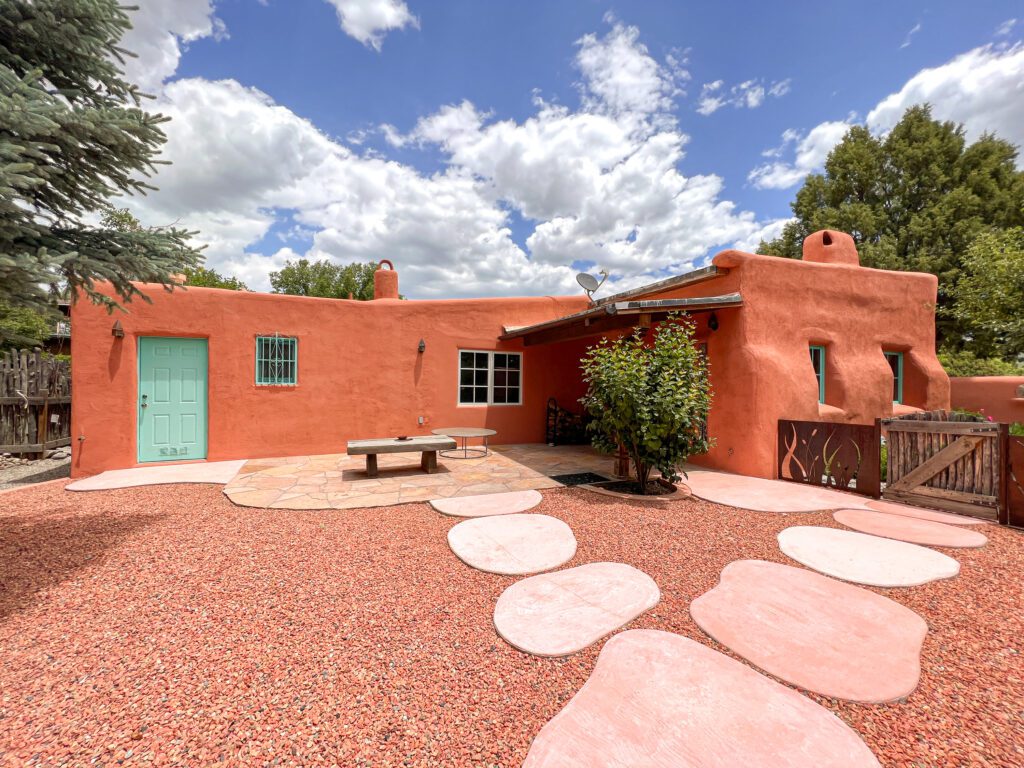
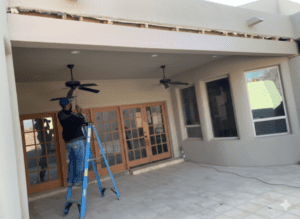
Stucco is the defining exterior finish across New Mexico. It shows up on Pueblo Revival homes in Santa Fe. It covers Territorial-style houses in Albuquerque. And it shapes adobe-inspired builds in Taos, and it wraps newer subdivisions in Rio Rancho and Las Cruces.
The high desert climate is part of why stucco works so well here. But that same climate is also what wears it down. Intense sun, wide temperature swings, and, depending on where you live, either monsoon downpours or hard winter freezes all take a toll over time.
Knowing what stucco repair actually costs in New Mexico helps you budget accurately. It also helps you recognize a fair quote when you see one, and spot an inflated one just as fast. This guide breaks down real 2026 pricing by repair type, by region, and by what pushes the number up or down.
Pricing on its own only tells part of the story, though. A 1970s adobe-style stucco system in Taos fails differently than a 2005 EIFS system in Rio Rancho. Lath and plaster is the trade stucco actually evolved from, and a contractor who understands it catches those differences early. That saves you from an expensive surprise mid-project.
Average Stucco Repair Cost in New Mexico
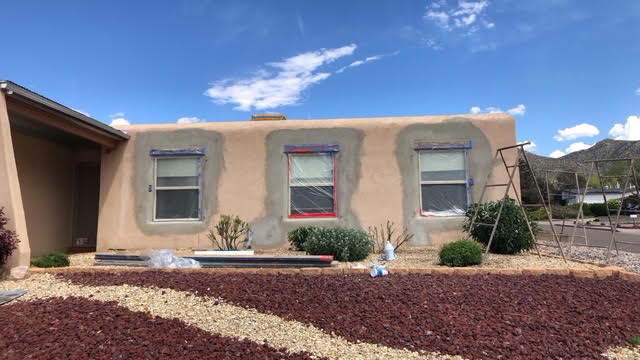
Most stucco repair projects in New Mexico fall between $350 and $6,000. That’s a wide range. A hairline crack on one wall and a wall section with deep water damage are two completely different jobs, and the price reflects that difference.
A small patch repair typically runs $350 to $800. A repair involving moisture damage or widespread cracking can climb to $2,000 or $6,000. Full resurfacing of an entire home’s exterior sits in its own category, running $5.00 to $7.50 per square foot, or roughly $7,500 to $18,000 for an average-sized home. A full tear-down to the substrate costs more; see our stucco resurfacing vs. full replacement guide for that breakdown.
Here is a general breakdown of what new mexico homeowners typically pay for stucco repair in 2026:
| Repair Type | Typical Cost Range |
|---|---|
| Hairline crack repair | $150 to $450 |
| Structural crack repair | $400 to $1,800 |
| Small patch repair (under 10 sq ft) | $350 to $800 |
| Medium patch repair (10 to 50 sq ft) | $800 to $2,800 |
| Water damage repair | $1,000 to $6,000+ |
| Full resurfacing (per home) | $7,500 to $18,000 |
These figures line up with current national data. Angi, Thumbtack, and HomeGuide all put stucco repair nationally between $8 and $50 per square foot, with typical projects landing between $600 and $2,900. New Mexico’s numbers sit toward the lower-to-middle end of that national band for straightforward repairs. Labor rates here run below coastal and high-cost metro markets, which helps keep routine work affordable. Once water damage or substrate replacement enters the picture, though, New Mexico pricing climbs toward the upper end of the national range just like anywhere else.
Stucco Repair Cost Per Square Foot Across New Mexico
Per-square-foot pricing is the easiest way to compare quotes from different contractors. It strips project size out of the equation and gives you a clean number to compare.
Across New Mexico, stucco repair generally costs $8 to $25 per square foot. Surface-level work sits at the low end of that range. Think hairline cracks or small chips that only need patching. Repairs that require cutting out damaged substrate, replacing wire lath, and matching a custom texture land toward the high end instead.
Full resurfacing runs $12 to $18 per square foot in most of the state. Homes with severe substrate damage, or ones that need multiple fresh coats, can push past $20 per square foot. Labor typically accounts for at least half the total cost. Licensed stucco contractors in New Mexico currently charge $45 to $75 per hour, and that rate is one of the biggest swing factors in any final quote.
How Stucco Repair Cost Varies by Region and Climate
New Mexico’s climate isn’t uniform, and neither is the damage stucco takes on across the state. A contractor who only works in one region can easily misread what’s actually failing when they see it somewhere else.
Albuquerque. The dominant issue here is thermal cracking. Daytime heat expands the stucco surface, and overnight cooling contracts it right back down. Years of that cycle create hairline and structural cracks over time. The monsoon season, which runs roughly July through September, turns any open crack into a fast-moving moisture problem. Albuquerque also sits at around 5,300 feet, so UV exposure is stronger than at lower elevations. That degrades finish coats faster than in milder climates.
See our Albuquerque stucco repair services for city-specific details.
Santa Fe and Taos. At higher elevation, freeze-thaw cycling replaces monsoon damage as the primary driver. Water works its way into a crack, freezes, and expands, forcing the crack wider than it started. This process often reaches the substrate faster than thermal cracking alone would. Repairs in these areas tend to sit toward the upper half of the statewide range, since freeze-thaw damage more often calls for substrate and lath work rather than a simple surface patch.
Learn more about stucco repair in Santa Fe and stucco repair in Taos.
Las Cruces. Sustained, intense UV exposure in the southern part of the state accelerates delamination. That’s the process where the finish coat starts separating from the base coat underneath. It shows up as chalking, fading, and eventually peeling, rather than cracking outright. Repairs here usually involve more finish-coat work than crack repair, which shifts the cost mix even when the total lands in a similar range to other regions.
Details on stucco repair in Las Cruces cover the local delamination pattern in more depth.
Rio Rancho. A large share of the housing stock in Rio Rancho was built in the 1990s and 2000s using EIFS synthetic stucco systems. Those systems are now 20 to 30 years old in many neighborhoods, which puts them close to the end of a typical EIFS service life. Homeowners here are more likely to need foam-board replacement and full EIFS section repairs than traditional three-coat patching. That tends to push per-square-foot costs toward the higher end of the statewide range.
See stucco repair in Rio Rancho for more on aging EIFS systems specifically.
These are directional patterns based on the failure modes each region actually sees. They’re not fixed local averages, and no two homes in the same neighborhood carry identical damage. The only way to get an exact number for your home is a contractor inspection, since hidden damage varies house to house even on the same street.
Common Types of Stucco Repairs and What Each Costs
Hairline Crack Repair
Hairline cracks are thin, surface-level fractures. They develop as stucco ages through repeated heating and cooling cycles, and they’re common across every region of New Mexico. Usually, a hairline crack is the first sign a wall needs attention.
The repair process is straightforward. A contractor cleans the crack, applies a flexible patching compound, and blends the texture to match the surrounding surface. Cost typically runs $150 to $450 for a small section. Caught early, hairline cracks rarely turn into structural problems. Addressing them quickly also keeps moisture from working its way into the wall through the fine opening.
Structural Crack Repair
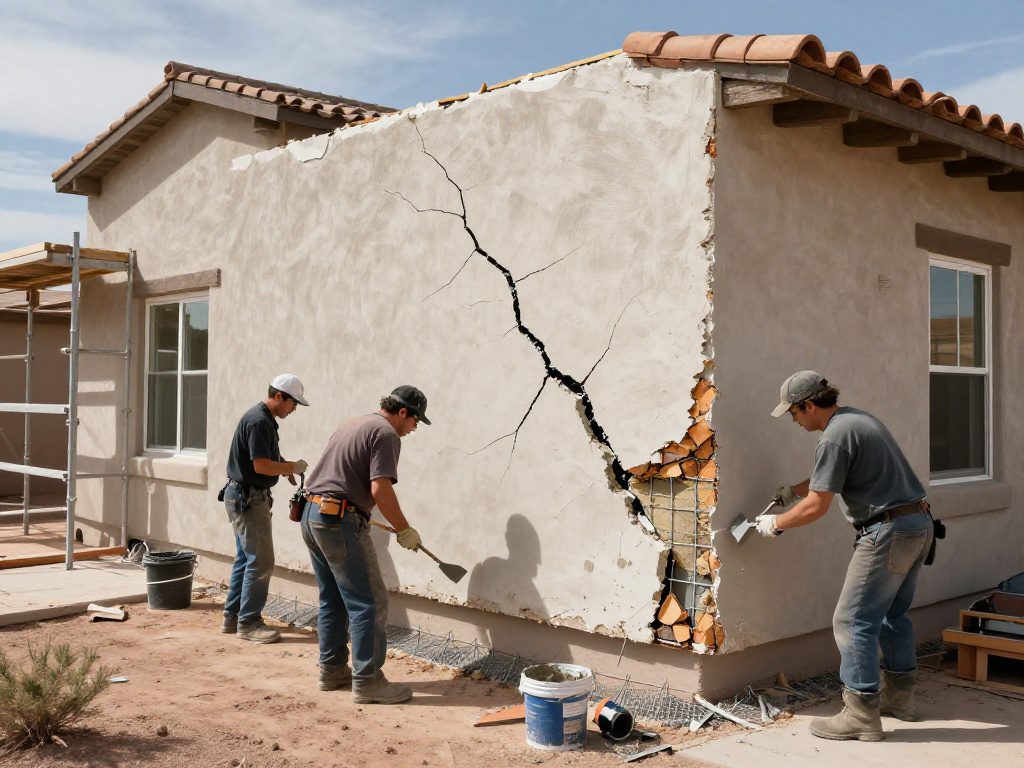
Structural cracks run wider and deeper than hairline cracks. They can signal wall movement, foundation settling, or ongoing moisture behind the surface. Because of that, they need a more involved repair process than simple patching.
Repairing a structural crack in New Mexico typically costs $400 to $1,800. Cases involving substrate damage can run higher than that. The process usually means cutting out the deteriorated stucco, repairing or replacing the wire mesh underneath, and rebuilding the section with fresh coats. Left alone, structural cracks let water into the wall assembly. In monsoon- or freeze-prone parts of the state, that damage can escalate within a single season.
Water Damage Repair
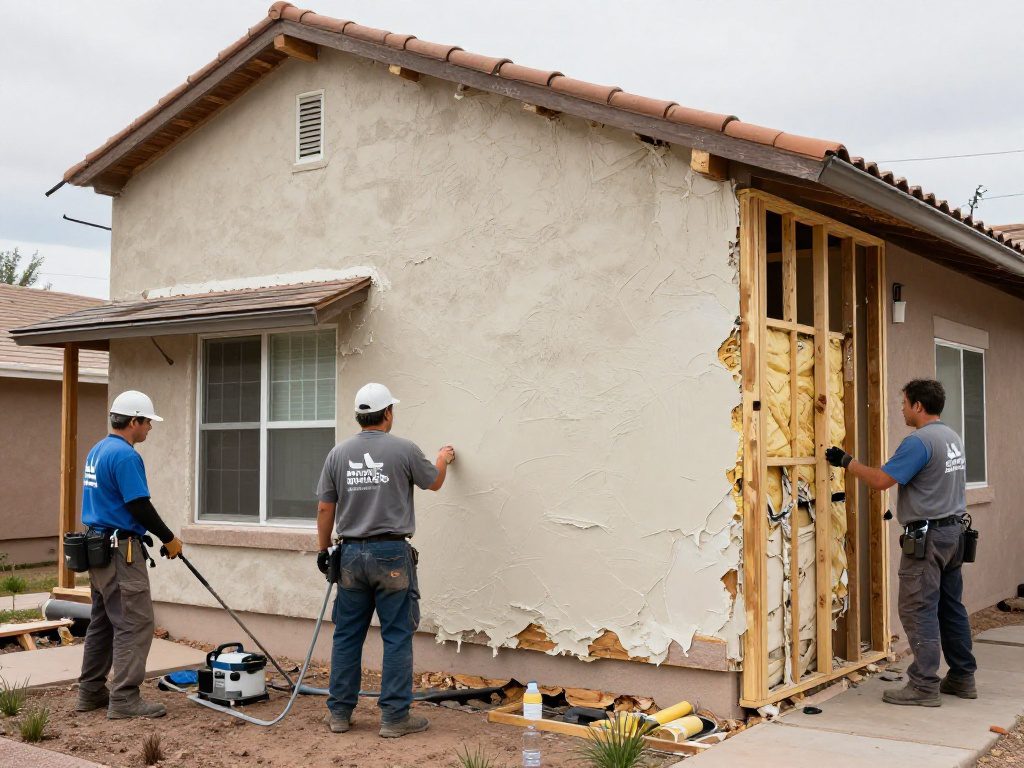
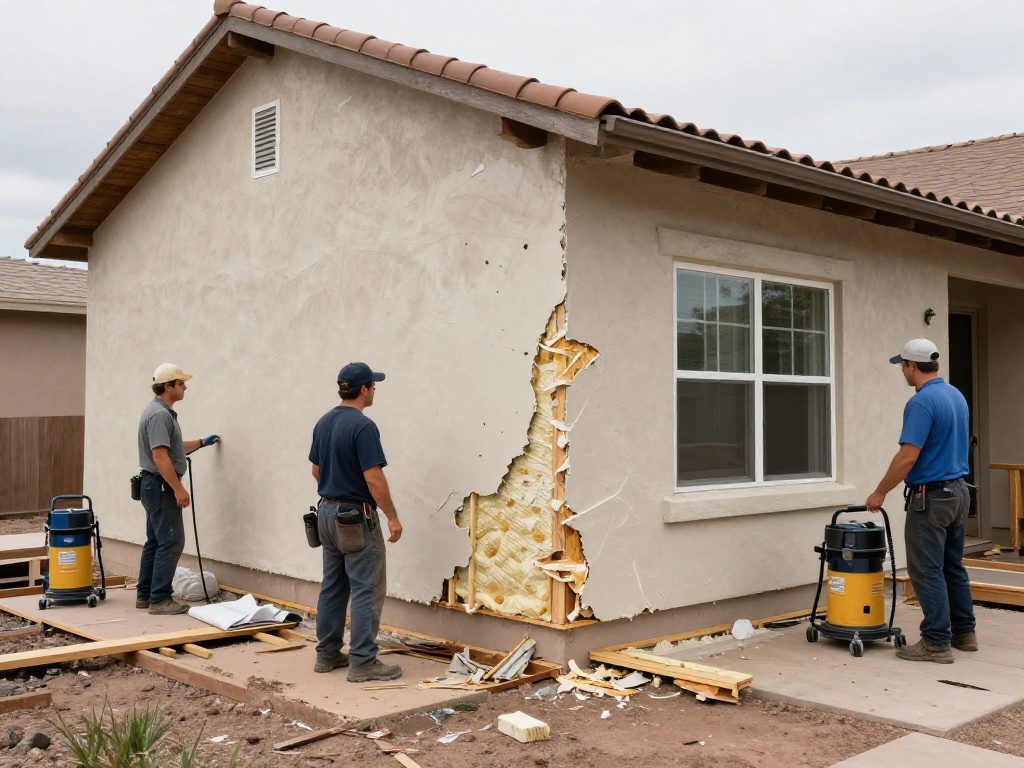
Water damage is the most expensive and least predictable stucco repair. Once moisture gets behind the finish, it can rot wood sheathing, encourage mold growth inside the wall cavity, and degrade the wire mesh or foam board supporting the system.
Water damage repair in New Mexico typically runs $1,000 to $6,000 or more. The final number depends heavily on how far the moisture spread before anyone caught it. The process involves removing all deteriorated stucco, drying the exposed area, replacing damaged sheathing or framing, and addressing mold if it’s present. Then the wall gets rebuilt from the substrate up. Accurate pricing before work starts is genuinely difficult here, since the full extent of damage usually isn’t visible until material comes off the wall.
Full Patch and Resurfacing
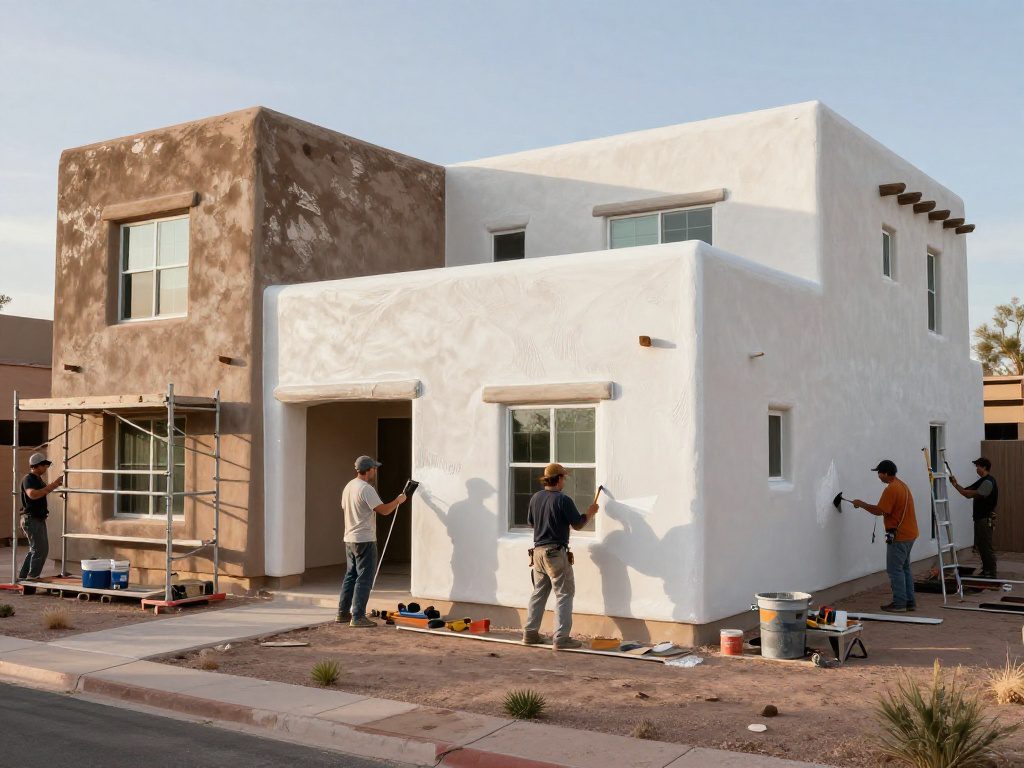
Full resurfacing makes sense for a home with widespread deterioration, inconsistent texture across sections, or an aging finish that no longer holds paint. It applies a new coat over the existing exterior, which restores the protective layer and gives you the option to update color or texture at the same time.
Full exterior resurfacing in New Mexico typically costs $7,500 to $18,000 for an average-sized home, or $5.00 to $7.50 per square foot — surface prep, crack repair, and a new finish coat over the existing base. Homes needing a full tear-down to the substrate fall into full-replacement pricing instead; our stucco resurfacing vs. full replacement guide covers both scopes and when each applies. For context, the Portland Cement Association publishes industry guidelines on properly mixed and applied stucco systems.
What Pushes Stucco Repair Costs Higher?
A handful of factors consistently raise the final bill beyond the base ranges above.
Accessibility. Two-story homes or hard-to-reach walls need scaffolding. That adds rental cost on top of labor, and it slows the whole job down.
Texture matching. Every stucco home has a slightly different surface texture. Matching it closely, especially on older homes, takes real skill and experience. A contractor who can’t match it accurately will leave a visible patch behind.
Number of coats. A traditional three-coat system, made up of a scratch coat, a brown coat, and a finish coat, needs cure time between each layer. That’s slower and more labor-intensive than a single-coat patch job.
Substrate condition. If damage reaches the foam board, wire mesh, or wood sheathing beneath the stucco, the repair scope expands fast. So does the cost.
Age of the existing stucco. Older stucco often uses different aggregate ratios than modern mixes. Matching it sometimes requires custom material blending, particularly on homes built before the 1980s.
Older and Historic Stucco: What Changes
Homes in Santa Fe and Taos often carry stucco systems, or true adobe construction under a stucco-style finish, that predate modern material standards. Some sit in historic districts with preservation guidelines that limit which materials and finishes a contractor can use. That affects both the process and the price.
Repairing this kind of stucco usually costs more than a standard patch job, for two reasons. First, matching an older, hand-troweled texture takes more time than matching a modern machine-applied finish. Second, a historic district may require specific materials or documented application methods to stay compliant. Homeowners in these areas should ask upfront whether a contractor has real experience with historic stucco or adobe systems, not just general repair work.
EIFS vs. Traditional Stucco: Does It Change the Repair Cost?
EIFS, or Exterior Insulation and Finish System, looks similar to traditional stucco. But it uses a foam insulation board under a thin acrylic finish coat instead of a solid cement base. It’s common on New Mexico homes built from the 1990s onward, especially in newer-growth areas like Rio Rancho.
EIFS repair costs generally fall in a similar range to traditional stucco: $8 to $20 per square foot for standard repairs. Water damage repairs cost more with EIFS, though. The foam board underneath often needs full replacement once it’s saturated, and that adds both material and labor time.
EIFS relies heavily on proper sealing at windows, doors, and other wall penetrations. When those seals fail, water finds its way in fast. A licensed contractor registered with the New Mexico Construction Industries Division can assess whether your system’s sealant joints are still holding up, or whether they’ve become the weak point.
Repair vs. Full Resurfacing: How to Decide
The decision comes down to two things. How widespread is the damage, and how old is the existing stucco?
Repairs make sense when damage is limited to specific areas. They also make sense when the surrounding stucco is structurally sound and texture matching is realistic. Resurfacing tends to make more sense when:
- Cracks appear across multiple walls or elevations
- The existing stucco finish is 20 or more years old
- Paint is peeling or failing broadly rather than in isolated spots
- Previous repairs have created visible texture mismatches across the facade
- The home needs a fresh, consistent appearance before a sale
A good stucco contractor will give you an honest assessment of which path is appropriate. Our stucco services page covers the full range of options in more detail.
Does Homeowners Insurance Cover Stucco Repair?
It depends on the cause. Most policies cover stucco damage from a sudden, specific event, like a storm, hail, or a burst pipe soaking the wall from behind. Gradual damage from age, weathering, or long-term thermal cracking generally isn’t covered. Insurers treat that as routine maintenance, not a covered loss, and the Insurance Information Institute has more detail on how standard homeowners policies draw that line.
Water damage sits in a gray area. An adjuster who can trace moisture to a covered event, like wind-driven monsoon rain during storm damage, may approve at least partial coverage. A long-standing, never-sealed crack is far less likely to qualify. Review your policy first, or ask your contractor to document the likely cause of damage before you file a claim.
FAQ SECTION
How much does stucco repair cost per square foot in New Mexico?
A: Stucco repair across New Mexico typically runs $8 to $25 per square foot. The exact number depends on damage depth, the number of coats needed, and how complex the texture matching is.
Q: Does stucco repair cost differ by city in New Mexico?
A: Yes, though the difference is more about what’s failing than the base price. Albuquerque sees more thermal cracking. Santa Fe and Taos see more freeze-thaw damage that reaches the substrate. Las Cruces sees UV delamination, and Rio Rancho sees aging EIFS systems that need foam-board work. Repairs tied to substrate or foam-board replacement generally cost more than surface-level cracking, no matter which city they happen in.
Q: Can stucco cracks be repaired without full resurfacing?
A: Yes. Isolated cracks and small damaged sections can usually be repaired without touching the whole wall. Widespread cracking across multiple surfaces, or stucco older than 20 years, often makes resurfacing the more cost-effective long-term option instead.
Q: Does stucco repair require a permit in New Mexico?
A: Small patch repairs generally don’t require one. Larger structural repairs, or work that affects the building envelope, may need a permit, and requirements can vary by county. A licensed contractor can confirm what your specific project needs before work starts.
Q: How long does a stucco repair last?
A: A properly done repair by an experienced contractor should last 10 to 20 years or longer. Poor surface prep or mismatched materials shorten that lifespan considerably.
Getting an Accurate Quote
Stucco repair quotes across New Mexico vary widely. Some contractors price low to win the job, then add charges once they find damage underneath. Others price accurately from the start, with a clear scope of work laid out before anyone touches the wall.
Get two or three quotes from licensed stucco contractors before you decide. Ask each one to walk through their process in detail: how they’ll prep the surface, how many coats they plan to apply, how they’ll match your texture, and what happens if they find substrate damage once the wall is open. A contractor who answers clearly and specifically is one who actually knows the work. Vague answers to basic process questions are a red flag worth taking seriously.
For a free stucco assessment anywhere in New Mexico, Happy Homes LLP evaluates the full scope of the problem before quoting a price. That means no surprises once work begins, and no gap between the estimate and the final bill.