Repair a pitched roof when the damage has one clear source, the roofing around it is still sound, and the roofer can tie new material into the old. Plan for replacement when wear covers several slopes, leaks show up in unrelated spots, or rot in the wood deck spreads past a small area. Knowing when to repair or replace a roof comes down to what failed and how far it goes.
This guide covers pitched roofs with shingle, tile, or metal. If your house has a flat roof, our flat roof repair vs. replacement guide covers that decision. Before you compare quotes for roof repair or replacement, ask each roofer for photos and a written explanation of the damage.
Start With the Water's Path
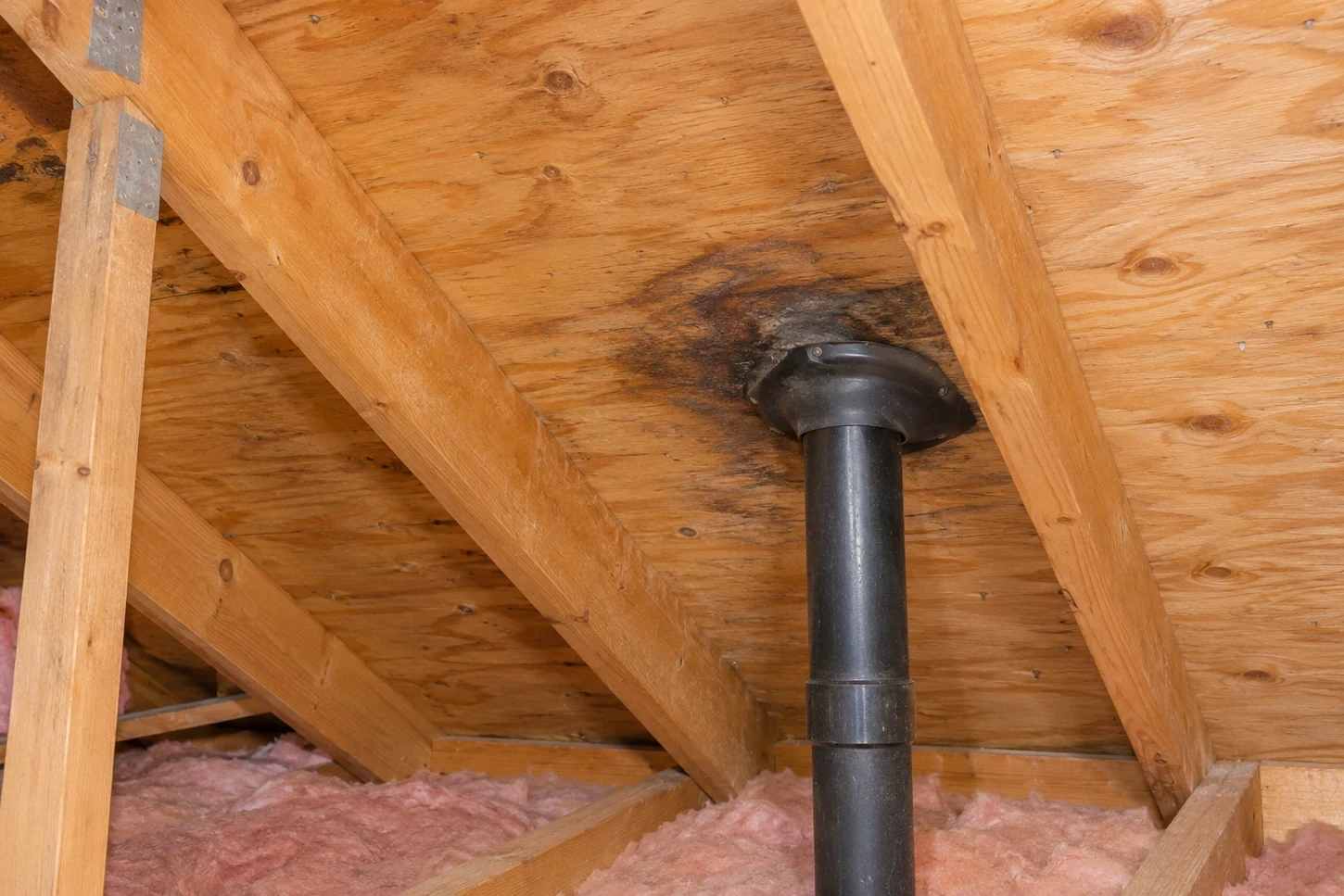
A ceiling stain shows where water came out, not where it got in. Water can run along rafters or decking before it drips, so the opening may be several feet from the stain. Note when the stain appears and whether it follows storms from one direction. If the attic is safe to enter, the roofer can compare stains from below with what they see on top.
Most roof leak repair work happens at seams and openings. Flashing is the metal that turns water away from vents, chimneys, skylights, and places where the roof meets a wall. If one flashing failed and the roofing around it can be lifted and relaid, a repair often makes sense. The Building America guide to flashing roof penetrations from the U.S. Department of Energy shows how flashing laps with the layers around it.
Ask which part of the leak path the roofer actually confirmed. If the quote is based on a likely source, it should say how the crew will check it once the area is open. That matters when a repair quote and a replacement quote describe the same stain.
Read the Inspection by Roof Type
The same visible damage can mean different work on different roofs, so the roof type shapes when to repair or replace a roof. These are the roof damage warning signs to look for in the report.
|
Roof Type |
Points Toward Repair |
Points Toward Replacement |
|
Asphalt shingles |
A few missing or damaged shingles, with the shingles around them still flexible |
Similar wear on several slopes, or brittle shingles that crack when lifted |
|
Clay or concrete tile |
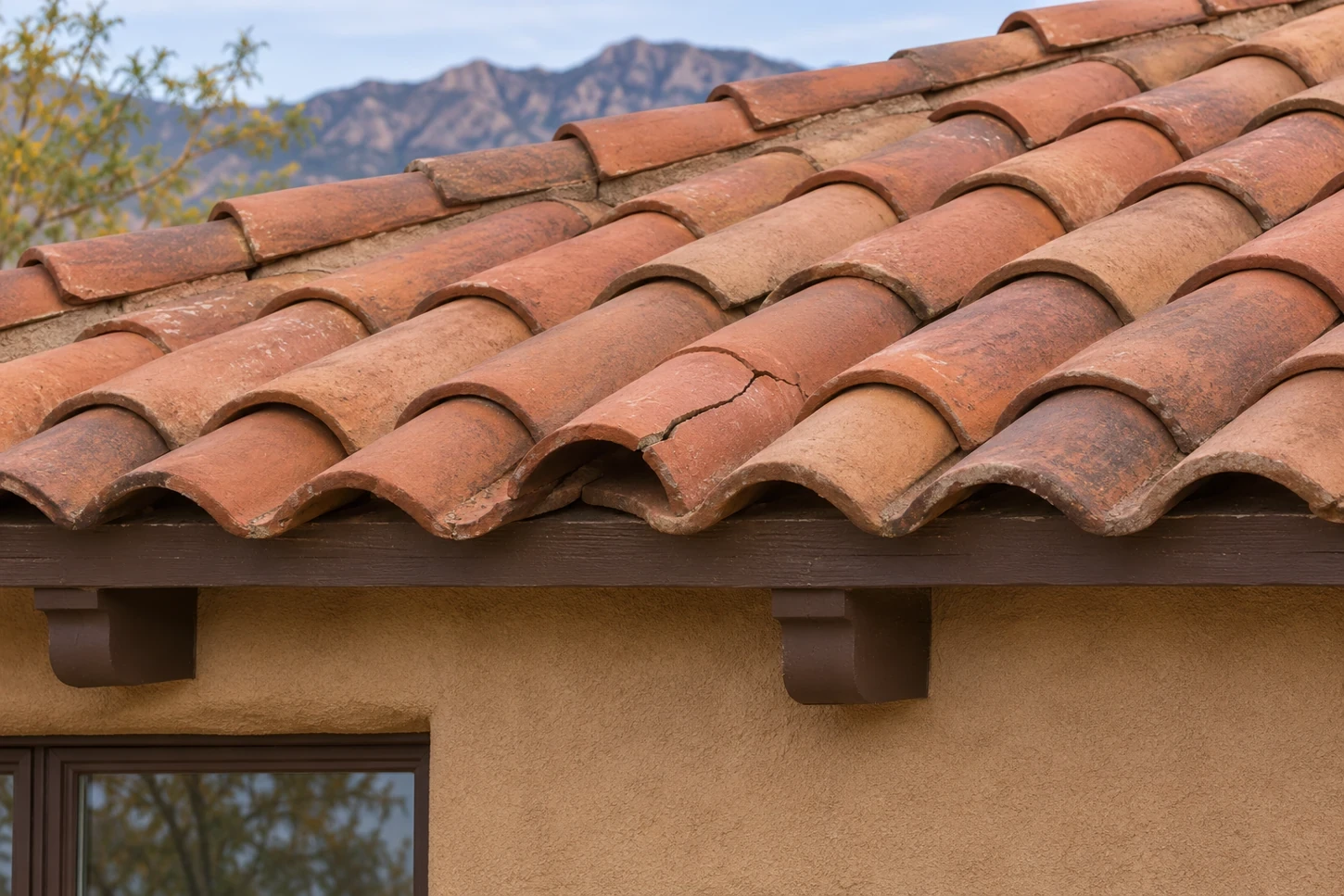
One broken or slipped tile, matching tile available, sound underlayment below |
Repeat leaks, or underlayment failing beyond the broken tiles |
|
Metal panels |
One bad flashing, panel, or fastener |
Rust or failed seams across several panels |
On shingles, ask whether the roofer can replace the damaged pieces without breaking the ones they lift. On tile, ask about the underlayment, the waterproof layer under the tiles. Tiles can look fine while the layer beneath them has worn out. Our Spanish tile roof repair cost guide explains what that work involves. On metal, ask whether the problem is at a seam, a penetration, or a fastener. The Tile Roofing Industry Alliance's technical briefs and the Building America metal roofing guide explain these details.
Check How Far the Damage Goes Below the Surface
The decision can change if water has reached the roof deck, the wood panels that hold up the roofing. Ask what the roofer saw from the attic and whether they need to remove a small area to check the deck from above. A stain only shows where water traveled. The roofer should explain whether the wood is still solid and how they know. See the Building America guide to sloped roof decking for how the deck fits into the roof.
If one area is damaged, ask where the sound wood starts. That boundary tells you whether the job is a small patch, one full slope, or more. Ask what the quote covers if the rot turns out larger than expected, and get the per-sheet price for deck replacement in writing. Bids that make different guesses about hidden damage are hard to compare without it.
Roof Inspection After a Storm: Hail, Age, and Past Repairs
Albuquerque's monsoon season typically runs from mid-June to late September, according to the National Weather Service Albuquerque office. Monsoon storms can bring strong wind and hail. After one, a roofer may find a lifted shingle or broken tile on a roof that was already worn. Ask them to separate fresh damage from old wear and photograph each slope.
The Insurance Institute for Business & Home Safety (IBHS) hail guide lists what real hail damage looks like on shingles:
- Hits fall in a random pattern, not in lines or one area.
- A bruise, or soft spot, can usually be felt at the impact.
- Ridge caps are among the most exposed parts of the roof.
- Dents in metal flashing or air conditioner fins are signs hail hit the house.
The same guide warns about look-alikes: blisters, granule loss along shingle edges, and marks left by installers or foot traffic. It also advises caution with unsolicited offers to inspect your roof after a storm. Take photos from the ground, but leave the roof walk to the roofer.
Then add roof age and history. Bring the install date if you know it, plus invoices and photos from past work. Repeat repairs at one vent point to a detail that needs a better fix. Repairs at several unrelated spots are common roof replacement signs, and the roofer should check the whole roof before pricing another patch.
Compare What Each Quote Covers
A good quote shows how the crew will join new work to the existing roof. For a repair, ask which areas will be lifted, what will be reused, and what happens if nearby shingles, tile, or panels break during removal. For a replacement, ask what comes off and how the crew will inspect the bare deck before the new roof goes on.
If you're replacing after hail damage, ask about roofing rated Class 4 for impact under the UL 2218 or FM 4473 standard, which the IBHS guide recommends. For budget ranges, see our Albuquerque roof replacement cost guide.
If you're deciding when to repair or replace a roof after a storm, mark the areas each quote covers on the same set of photos. Keep the inspection notes and the crew's photos from when the roof was open. They give you a baseline if a stain comes back.
Two Scopes on the Same House
Here is an illustrative example. An Albuquerque homeowner sees a stain after a July storm. The roofer finds a cracked rubber boot around a vent pipe, staining limited to the nearby deck, and solid wood and flexible shingles around it. A repair quote could cover a new boot and flashing, the damaged shingles, and a check of the exposed deck. The homeowner can ask for a photo of the area before it's covered.
Now suppose the roofer also finds brittle shingles on another slope, signs of separate leaks, and old patches in several spots. The vent repair still fixes the new stain, but the rest of the roof remains a problem. Compare a repair quote with a replacement quote, and check what each covers if more deck damage turns up.
Get an Inspection That Shows the Repair Boundary
Before deciding when to repair or replace a roof, ask the roofer to mark the damaged slopes, show what's still sound, and show where new material would meet old. If they recommend replacement, ask which findings rule out a smaller repair. If they recommend a repair, ask what could change that once work starts. Our guide to preparing your roof for winter covers the checks to do once the work is done.
Share your photos, leak dates, and repair records with Happy Homes' Albuquerque roofing team and ask for a written assessment that ties each symptom to the work it needs.