Before you buy an older house in New Mexico, check four things first: how water gets in, whether the structure has moved, the age of the wiring and pipes, and whether past changes were permitted. Those findings decide how much of your budget is left for the remodel you actually want.
This older home inspection checklist for New Mexico buyers covers Albuquerque, Rio Rancho, Santa Fe, and the East Mountains, where many homes are decades old. In Albuquerque, about 46% of homes were built before 1980, according to Census ACS 2024 data. Fresh paint or a new kitchen tells you little about the systems behind them.
Start With Records and a Licensed Inspector
Start your older home inspection checklist with the seller’s repair records, gathered before the inspection. They help your inspector match what they see to the home’s history.
Roof install dates, repair invoices, and warranties.
Past leaks, drainage problems, and water damage.
Electrical, plumbing, heating, and cooling upgrades.
Permits and final approvals for additions, conversions, and major changes.
Earlier inspection reports and how findings were fixed.
Missing records are questions to follow up, not proof of bad work. Check permit history yourself: Albuquerque permits are in the city’s ABQ-PLAN system, and homes outside city limits may have permits on file with the state Construction Industries Division. Our guide to when New Mexico remodels need a permit explains which work should have one.
It’s illegal to inspect homes in New Mexico without a state license, so verify the inspector’s license with RLD. For adobe or a house with several additions, ask about direct experience with that construction. Under the state’s home inspection standards, an inspector doesn’t decide whether the home meets building code, so permit checks stay your job.
Check the Roof, Drainage, and Leak History
Start with where water enters and where it goes. An unresolved leak can turn a roof repair into ceiling, insulation, framing, and wall repairs.
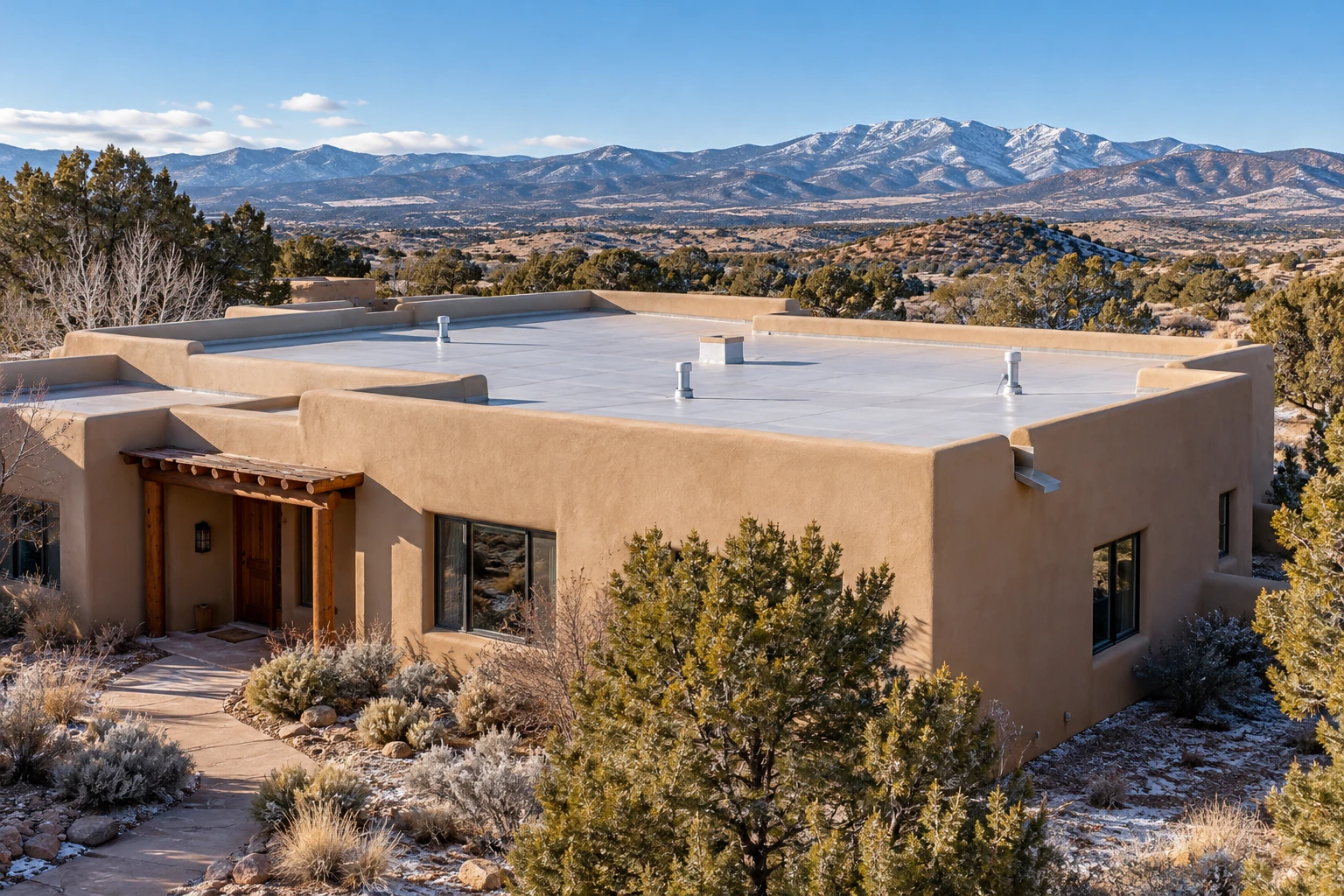
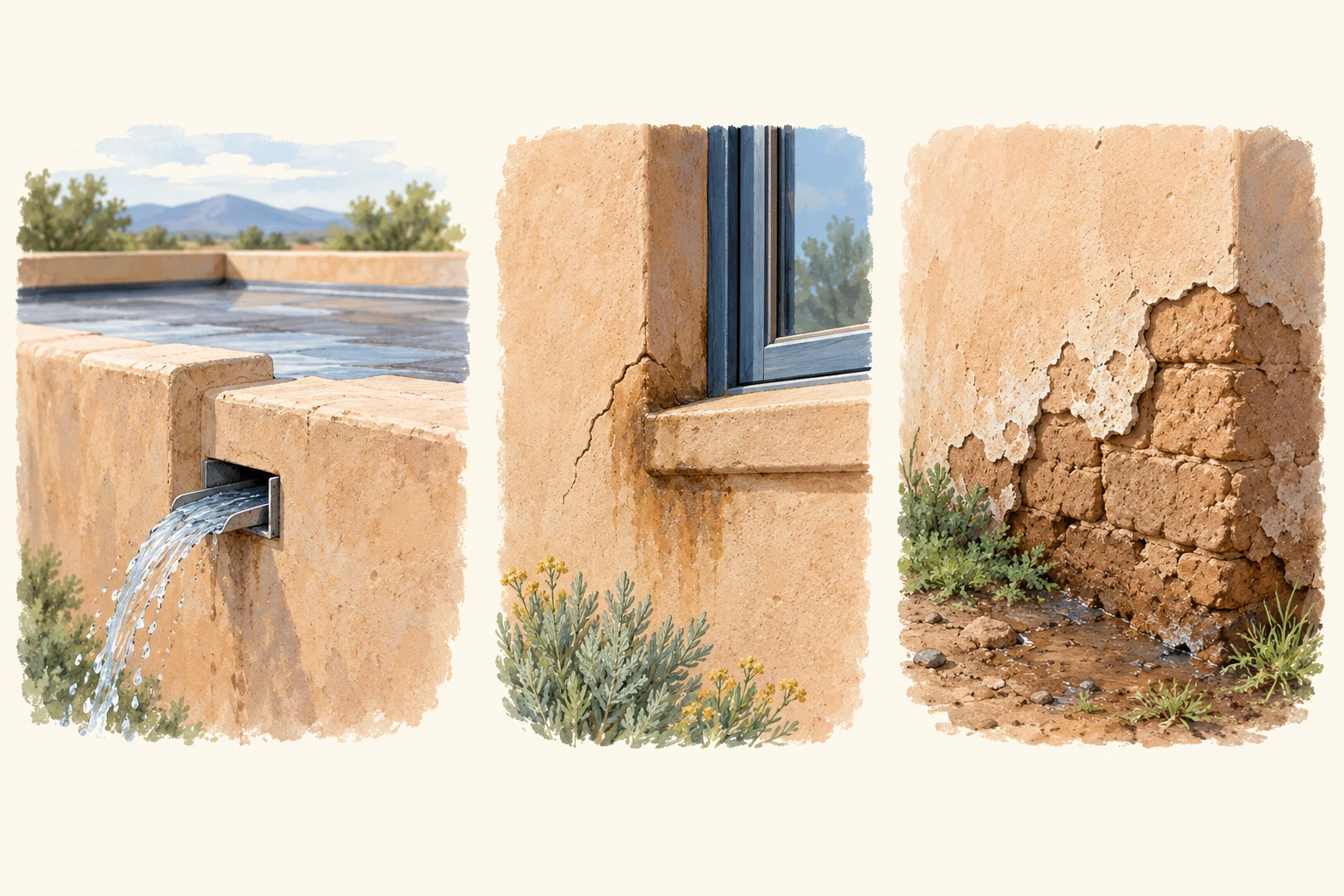
On a flat or low-slope roof, ask the inspector to check drainage, roof edges, penetrations, and parapets (the short walls around the roof edge). Scuppers, the drain openings through those walls, should be clear, and the water they release shouldn’t land against the house.
Inside, look for ceiling stains, peeling finishes, swollen trim, and fresh paint on one small patch. Ask when each leak happened, what caused it, and whether the repair fixed the source.
A dry showing day won’t show you much. In 2026, August was very dry across most of the Albuquerque area, then late-season storms brought the Sunport to 5.92 inches for the monsoon, above the 4.48-inch normal, according to the NWS Albuquerque monsoon review. Ask how the house handled those September storms.
If roof questions remain, get a roofing assessment and a written repair scope. Happy Homes’ roofing services cover repair and replacement planning across the area.
Look Past Stucco Cracks and Fresh Paint
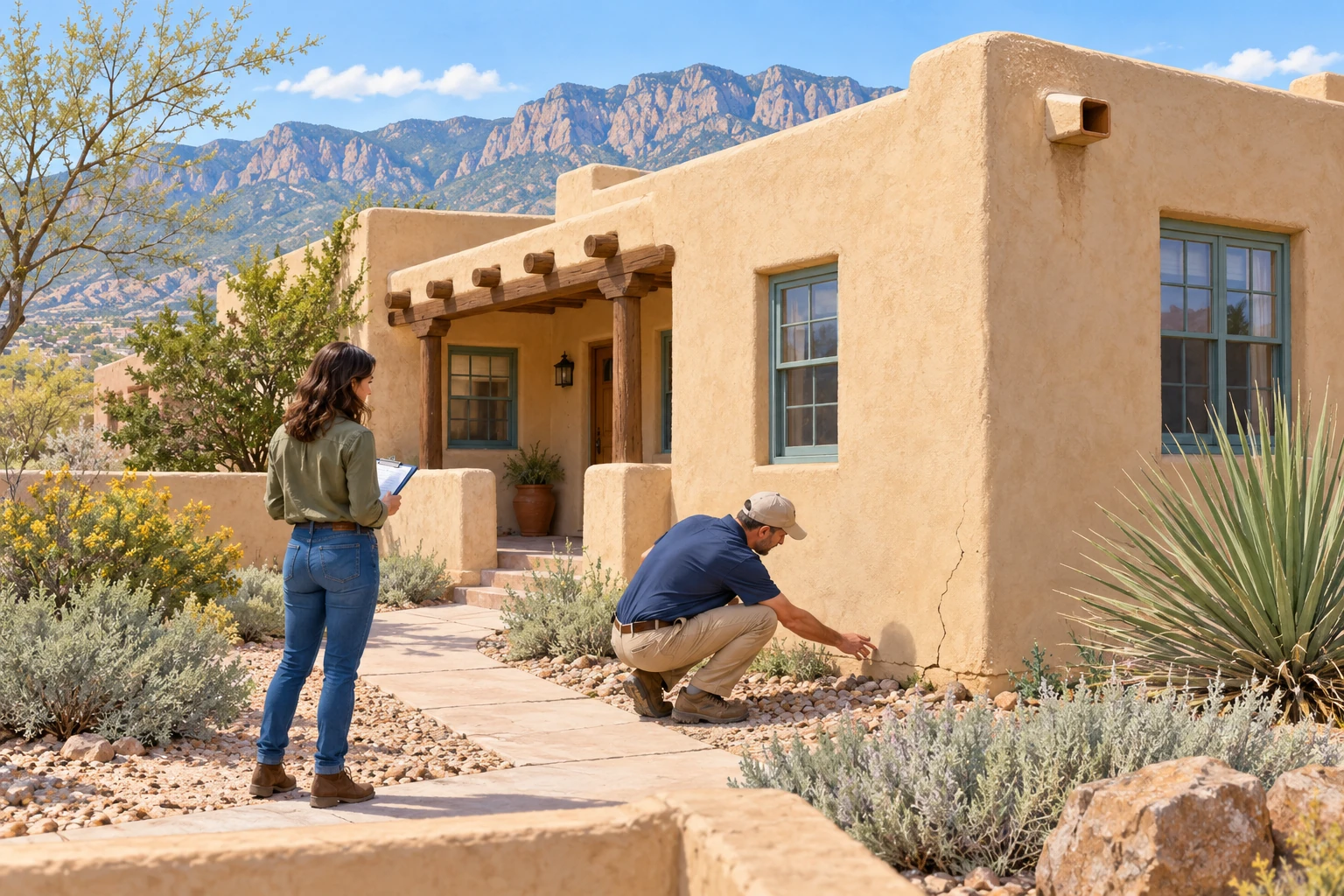
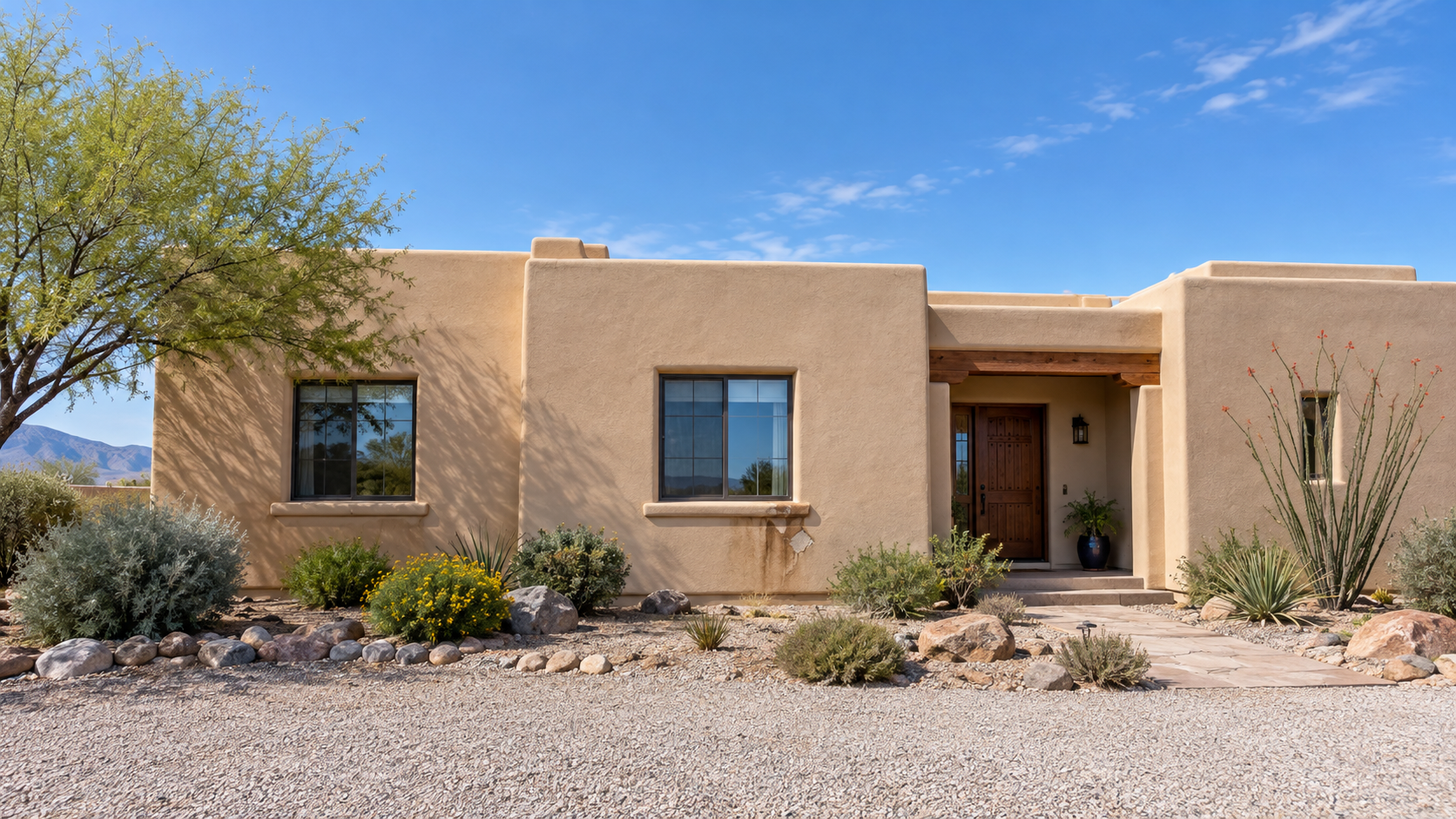
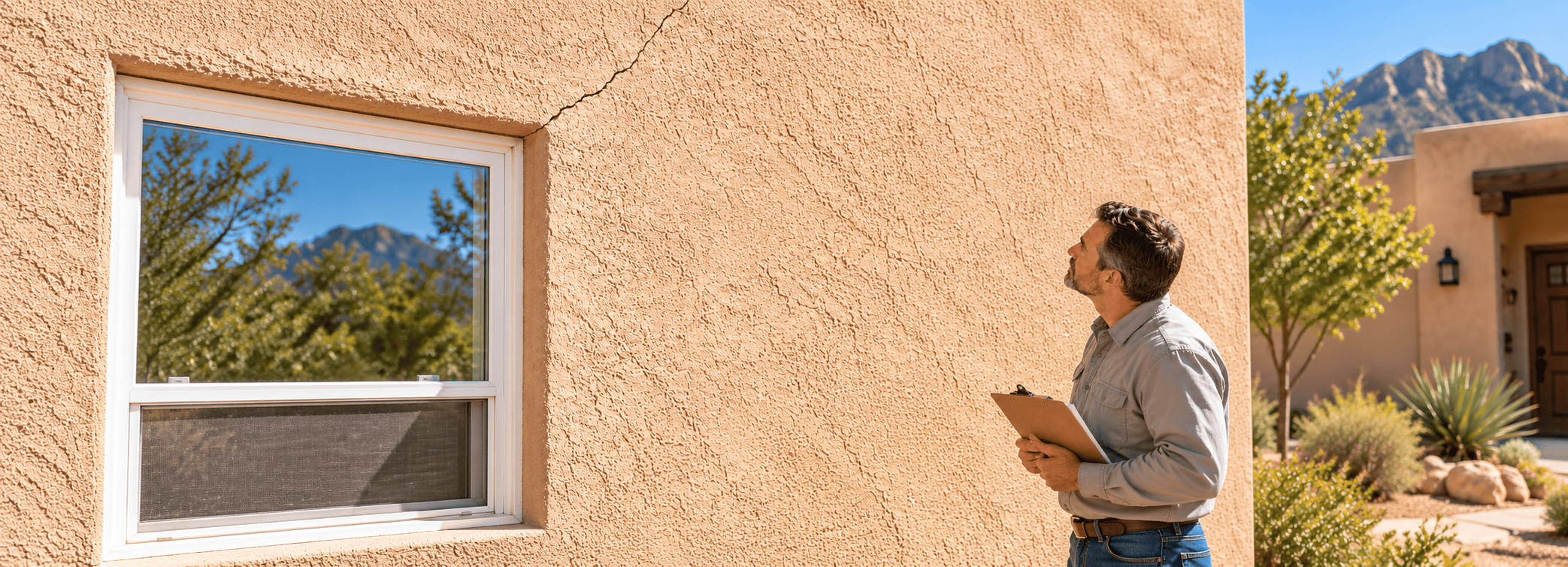
Stucco cracks need context. Note where they are, whether nearby areas bulge or stain, and whether the same spot has been patched again and again. A crack beside a leaking window means something different from a single hairline crack. Our post on stucco moisture damage warning signs shows what to look for.
Check wall bases, window and door openings, roof-to-wall joints, and the seams where additions meet the original house. Then look at the ground: soil, paving, and irrigation that hold water against walls should be fixed before any finish repair.
Give Adobe Walls Their Own Review
Stucco doesn’t tell you what’s holding the house up. Confirm whether the walls are adobe, masonry, wood frame, or a mix.
Cement stucco over adobe is common in older homes, but the two don’t move together. The National Park Service’s adobe preservation brief notes cement stucco expands 3 to 10 times more than adobe, so it cracks, lets water in, and stops the wall from drying out.
Have an adobe-experienced professional check wall-base erosion, bulging, moisture stains, or past repairs before you change openings or finishes. Happy Homes’ adobe home construction services can help plan that work.
Review Older Electrical and Plumbing Systems
Ask two questions about each system: does it have defects, and can it handle the renovation you’re planning? A working kitchen may still need new circuits or plumbing for the layout and appliances you want.
Electrical Condition and Capacity
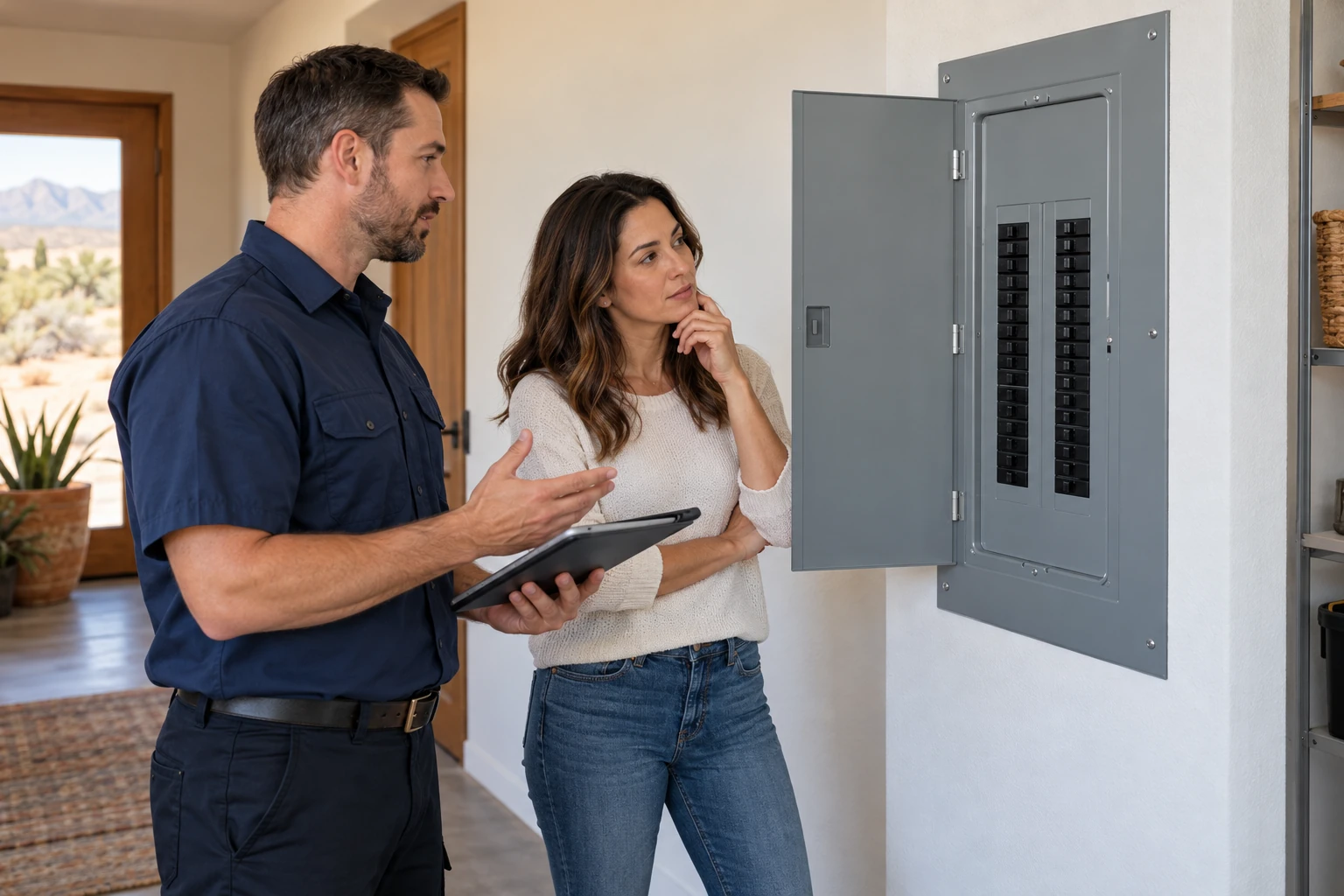
Ask the inspector to document wiring concerns, panel defects, grounding issues, and missing outlet protection. Tell them about breaker trips, flickering lights, or past electrical changes.
If you plan to add an induction range, heat pump, refrigerated air, or EV charger, have a licensed electrician check capacity. Spare breaker slots don’t mean the panel can take the load. See the signs your home needs a panel upgrade and our electrical panel upgrade cost in New Mexico guide for typical prices.
Plumbing, Drains, and Sewer Lines
Ask which pipe materials are visible, what has been replaced, and what is hidden. Note leaks, corrosion, stains under fixtures, slow drains, and pressure drops when two fixtures run at once.
A remodeled bathroom doesn’t mean the pipes under it are new. If drains back up or the sewer line has been repaired before, book a sewer-camera inspection. In Albuquerque, the Water Authority maintains only the main line; the owner is responsible for the pipe from the house to the main.
Investigate Foundation Movement and Structural Changes
Uneven floors, sticking doors, and wall cracks are clues to read together. None of them names the cause alone.
New Mexico adds one local risk. The NM Bureau of Geology says collapsible soils, which compact once they get wet, are common in the state, often triggered by leaking water lines, septic systems, or roof runoff. That makes drainage and plumbing leaks a foundation question too. If the cause of movement is unclear, get a structural engineer’s assessment.
Pay close attention to removed walls, widened doorways, enclosed porches, and converted garages. Before you budget for an open floor plan, find out which walls carry load.
Add Heating, Cooling, Lead, and Radon
Record the age and service history of the heating and cooling equipment, and ask what couldn’t be tested during the visit. If the home has a swamp cooler, include its water line and roof penetration.
For homes built before 1978, plan for lead paint before sanding or demolition. The EPA estimates 87% of homes built before 1940 and 24% of homes built from 1960 to 1978 contain some lead-based paint. A visual inspection can’t tell you which surfaces do.
Test for radon too. The EPA recommends fixing homes at 4 pCi/L or higher, and testing is the only way to know your level. The NMED radon program has New Mexico testing information; check that results will arrive before your inspection deadline.
Older Home Inspection Checklist by New Mexico Area
Add these local items to your older home inspection checklist based on where in New Mexico the home is.
|
Area |
Add to Your Checklist |
|
Albuquerque |
Search ABQ-PLAN for permits. Camera-inspect the sewer line, since the owner is responsible for the pipe to the main. |
|
Rio Rancho and Corrales |
Check where roof and yard runoff goes. Ask how the home handled the late-season 2026 storms. |
|
Santa Fe and Taos |
Confirm the wall type. Have adobe walls under cement stucco checked at the base and around openings. |
|
East Mountains (Edgewood, Tijeras, Sandia Park) |
Septic systems must be evaluated before sale under 20.7.3.902 NMAC; ask for the report. Arrange separate well testing. |
Turn Findings Into Home Repair Priorities
Your older home renovation checklist should split confirmed repairs from open questions. An unknown needs investigating before anyone can price it.
|
Finding |
Next Step |
Budget Impact |
|
Roof stains, unclear repair history |
Find the leak source and damaged materials |
Include leak repair and interior restoration |
|
Stucco bulging or moisture signs |
Get a construction-specific assessment |
Set the real scope before pricing a finish repair |
|
Electrical defects or unclear capacity |
Get an electrician’s assessment |
Separate required repairs from upgrades for new equipment |
|
Recurring drain problems |
Ask a plumber about a camera inspection |
Clarify fixture, indoor pipe, or sewer line work |
|
Movement with an unclear cause |
Get a structural assessment |
Settle the scope before spending on finishes |
|
Worn cabinets, paint, or flooring |
Price after essential repairs |
Phase upgrades around the remaining budget |
Rank work by safety, active damage, and order of work. Stop an active leak before fixing stained finishes, and plan wiring before walls are refinished.
Illustrative example: a buyer wants to update an older Albuquerque kitchen and add an induction range. The inspection finds a ceiling stain and electrical concerns. Before pricing cabinets, the buyer needs three answers: is the roof still leaking, which electrical repairs are required, and what capacity the range needs.
Ask contractors to split estimates into required repairs, work the remodel needs, and optional upgrades, with exclusions listed. Review everything with your real estate agent before your inspection deadline. A fixable house can still cost more than you can spend.
Plan the Remodel Around What the Home Needs
Once you know which repairs are essential, which questions are open, and what can wait, the budget gets much easier to set.
If you’re buying in Albuquerque, Rio Rancho, Santa Fe, or elsewhere in New Mexico, bring your inspection report, photos, completed older home inspection checklist, and planned changes to Happy Homes. We’ll help you scope the repairs and plan home remodeling in the right order. Contact Happy Homes to set up a visit.